

Last Updated on July 10, 2025 by Evelyn Martinez
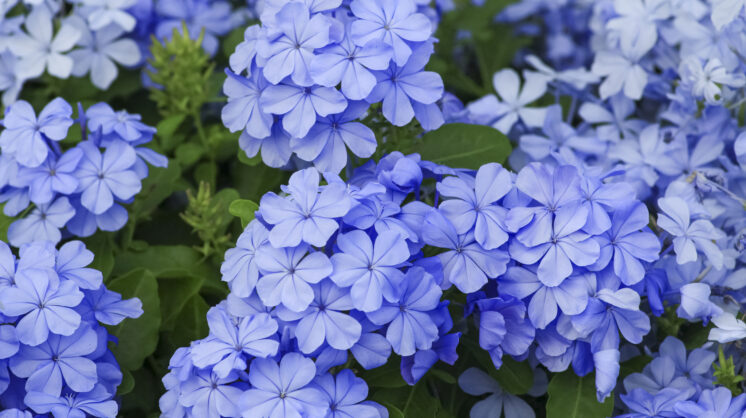
Blue is one of the rarest colors in the garden. Flowers come in many gorgeous hues: red, gold, purple, white and even orange are common. But it is difficult to find a vibrant blue in a South Texas summer garden — and this is what makes the plumbago so special.
Blue plumbago (Plumbago auriculata) is one of the most charming plants in the summer garden. It is a sprawling shrub acting like something between a ground cover and a bush. Blue clusters of flowers grow profusely along branches that wave in the wind. The flowers are somewhat delicate, so protecting this plant from too much wind is important.
Also referred to as Cape Plumbago, the plant is native to South Africa, where it entered the ancient trading networks from the Cape of Good Hope. These warm-weather origins make plumbago a perennial in the Coastal Bend, as opposed to areas of Mexico where it does not freeze, and plumbago can grow to massive dimensions.
Though its leaves typically fall during Coastal Bend winters, the root stock is very hardy. After the first frost, cut the stems back severely to encourage vigorous regrowth. In spring, the plants will quickly return from the roots and main branches, soon leafing out and blooming beautifully. Plumbago blooms best on new growth.
The plant also makes an excellent choice for hanging pots, with branches that cascade downward, showcasing clusters of delicate blue flowers. To enjoy lush growth year-round, bring the plants indoors during winter.
Gardener’s Notes
Growing Up: Spacing, 3’ to 4’. Height, 4’ to 8’. Plumbago is easy to grow and should be planted from transplants in full sun. Too much evening shade can result in slower growth and fewer blooms. It thrives in rich, well-drained soil, so incorporate several inches of organic compost and two cups of pastured poultry manure per plant at the time of planting and again each spring. Water regularly until the plant is established. Mulch with native leaves to retain moisture, and enjoy the added benefits of its salt tolerance, deer resistance and lack of pest problems.
Profiling: Plumbago does well planted against a wall or fence as a backdrop to a flower bed. The flowers are shaped like phlox and offer a great contrast to actual phlox, which is purple. It also pairs well with scarlet sage white daisies and blue mistflower. Bees are especially attracted to blue flowers, and will visit plumbago all summer.
Fun Facts: Plumbago is also called leadwort, or “cure for lead.” For centuries, people believed the plant was a cure for lead poisoning based on the writings of Roman historian Pliny the Elder. Pliny thought plumbago was a cure for lead poisoning simply because the blue of the flowers looked like the blue of lead. Pliny also said that plumbago cooked with the feet of a horned owl was a good cure for snakebite, so use his remedies at your own risk.