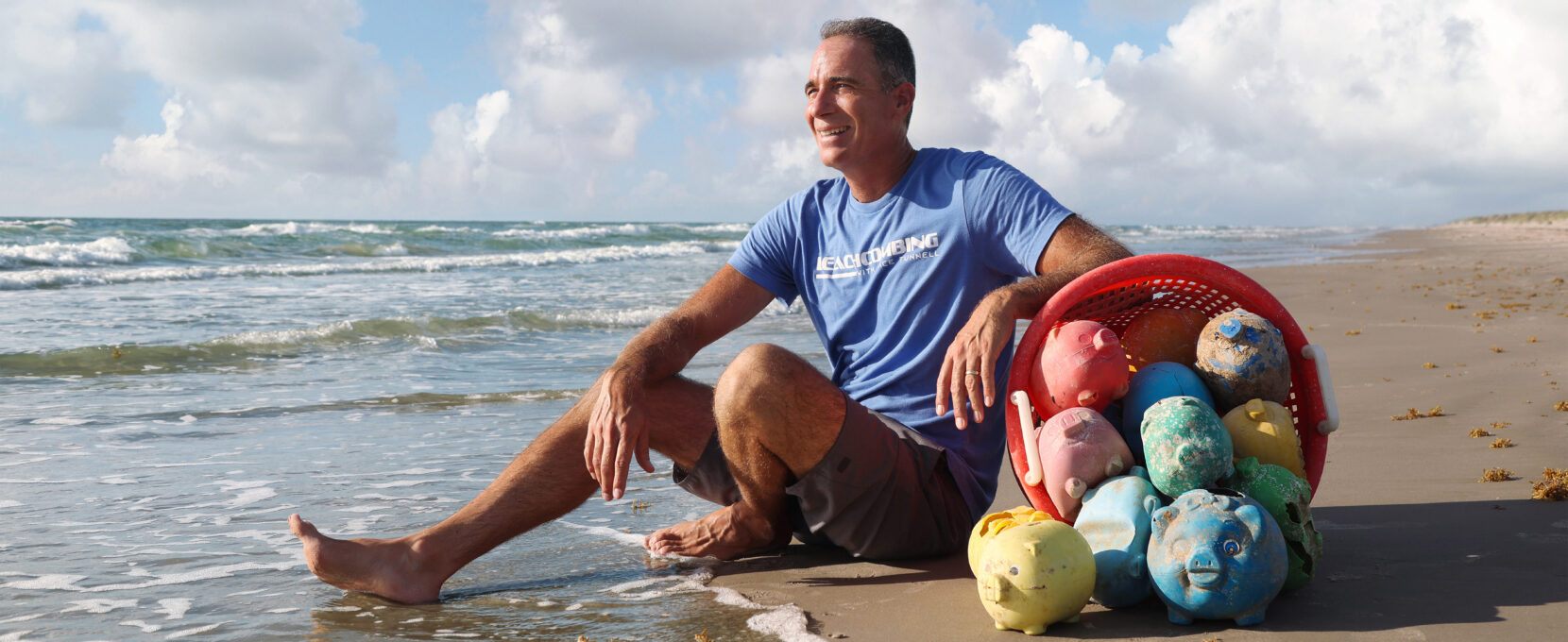
In perpetuity, something new washes up on a Texas beach, and Jace Tunnell is usually the one who finds it. What started as a pandemic project has become a six-year effort to educate the public about the Gulf Coast. Tunnell is the Director of Community Engagement at the Harte Research Institute (HRI) and spends his time making science approachable by connecting with the public.
His series “Beachcombing” is one of those efforts. An episode covers a specific item or organism that has washed ashore, explains its significance and introduces viewers to the scientists at HRI and their work.
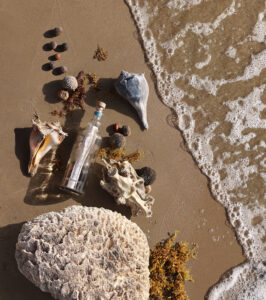
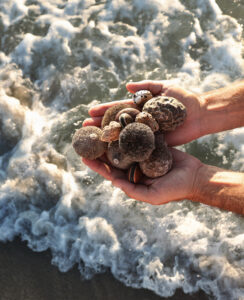
Tunnell shared one of his best finds, which arrived by way of a message in a bottle from an 11-year-old girl. She and her family were sailing around the world on a catamaran, and as they crossed the equator off the coast of Brazil, she threw a bottle into the water. A year and a half later, Tunnell found it on the beach at Port Aransas. Inside were two pages: a child’s crayon map of the family’s route, and a letter in French recounting their year at sea. He tracked down someone to translate it, then wrote to the address the girl had left inside. About a month later, a reply came back with photos of their family, their boat and the place they call home in France.
“There’s an etiquette to a message in a bottle. You’re supposed to do pencil only, because pen fades over time. You put money in there to pay for postage, and you only put your home address—never a phone number or email. It’s supposed to be old-school communication. And you always put a date in for when you threw it in,” said Tunnell.
Around episode 30 of the series, Tunnell thought he was finished. “Well, I’ve covered seashells, sea beans, trash and some of the strange animals. What else could wash up? Now, hundreds of episodes later, I laugh at that.”
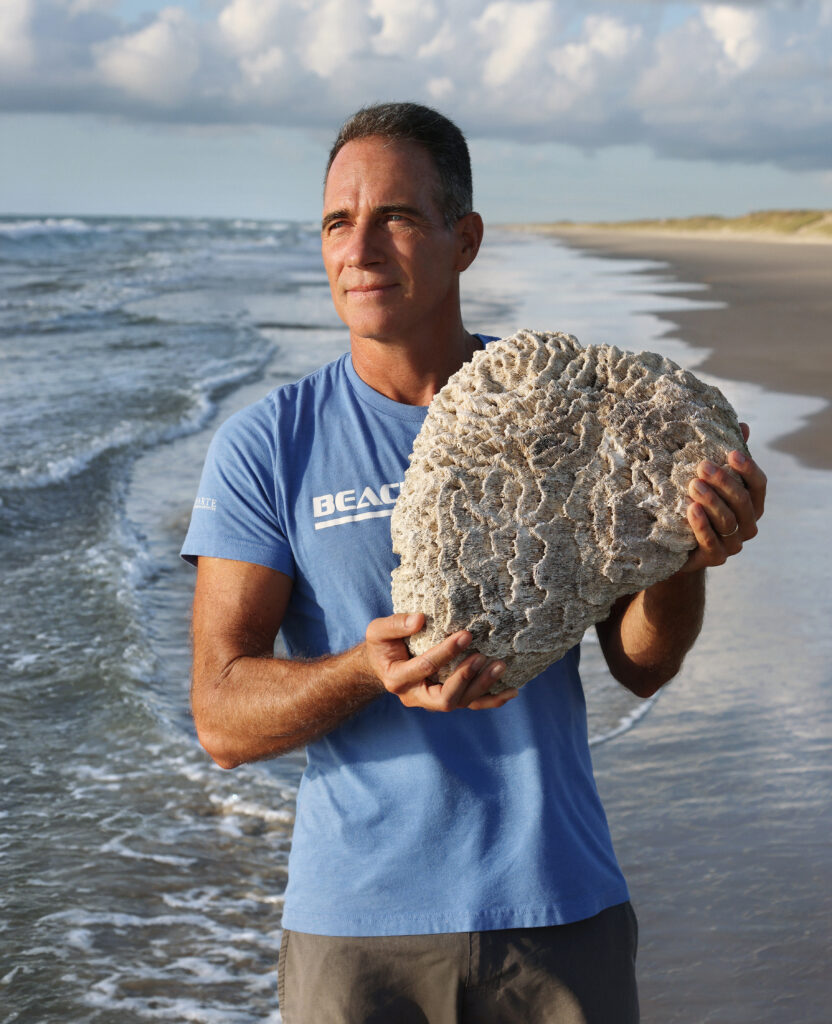
The beach changes every day. From currents to winds and climate, many variables affect what washes up ashore. Tunnell has been surprised by how much material can be taught about his findings. “And I’m still finding things I’ve never seen before … Every time I start thinking I’ve seen everything, the Gulf basically says, ‘No, you haven’t.’”
Fresh installments of “Beachcombing” drop every Monday at 1 p.m., bringing bite-sized videos to YouTube and Facebook viewers. The project also appears as a recurring column in the Corpus Christi Caller-Times.
Tunnell’s interest is a generational appreciation for nature and the Coastal Bend. His father started at what was then Corpus Christi State University in 1974 teaching marine biology. Growing up near the university, Tunnell was exposed to what would become his profession.
“He was always doing beach surveys up and down the beach in the early to mid-’80s. I mean, that’s what we did. And I’d call out the bird names while he was driving and marking them down.”
His father also helped start the Harte Research Institute. Now, since his passing, Tunnell is at the institute, carrying on the legacy and continuing to explore stretches of the beach that still have plenty of conversation topics.
Contact: youtube.com/@HarteResearch | harteresearch.org