

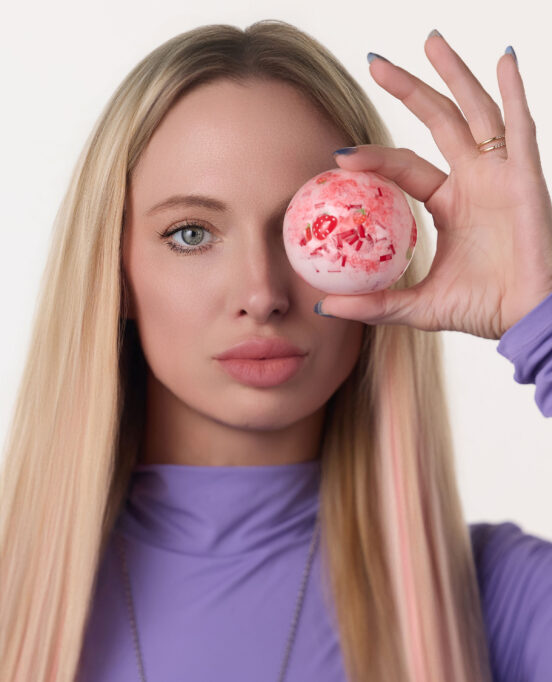
Sensory tools have always been a part of Jenna Hickman’s life. With two neurodivergent children and being neurodivergent herself, Hickman bought various tools for her kids to use until she discovered how incredible handmade squishies were. Thanks to her art degree and experience with clay, she thought, “How hard could it be to make these myself?”
Hickman’s own obsession with texture helped. Anytime she held someone else’s product, she’d go through a rolodex of possibilities in her mind. From the endless variations of ratios, texture combinations and inclusions, creating the brand Smushberry opened up a whole new sensory experience for her and her children to help regulate the nervous system and calm emotions.
KYLIE COOPER: At what point did something you were making specifically for your kids begin to feel like it could become something bigger?
JENNA HICKMAN: I started sharing videos of what I was making on social media simply because I love creating. Very quickly, people began following and messaging me, including therapists, special education professionals and neurodivergent adults. I also started receiving messages from people saying they found the videos themselves incredibly calming and soothing.
But the real turning point was a video showing a huge pile of pink squishies I had made, all with different textures. It went viral, and suddenly I had hundreds of messages asking me to please open a website. My husband, Taylor, said, “I think you need to do this now.” He has been incredibly supportive of Smushberry from the beginning, which is particularly impressive, considering it ultimately brought more slime into our lives. I had already spent months experimenting, with plenty of failures along the way, so I finally thought, “Okay, let’s do this.” Within a week, Smushberry was online.
COOPER: What did hearing from therapists and special education professionals mean to you?
HICKMAN: Before Smushberry was a business, I left a few of my creations with a local therapist to use with clients. It wasn’t meant as marketing, so when I was asked if I had business cards they could give people, it was one of the first moments I realized these might be valuable outside my own family. As more therapists, special education professionals and ADHD and autistic adults began reaching out, it became about much more than realizing people wanted to buy something I made. This had started because I understood firsthand how significant sensory needs can be within a family. Hearing from people with similar needs who genuinely wanted what I was creating made me feel like I had stumbled into something I was supposed to be doing. It stopped feeling like a fun little business idea and started feeling, in a very real way, like a calling.
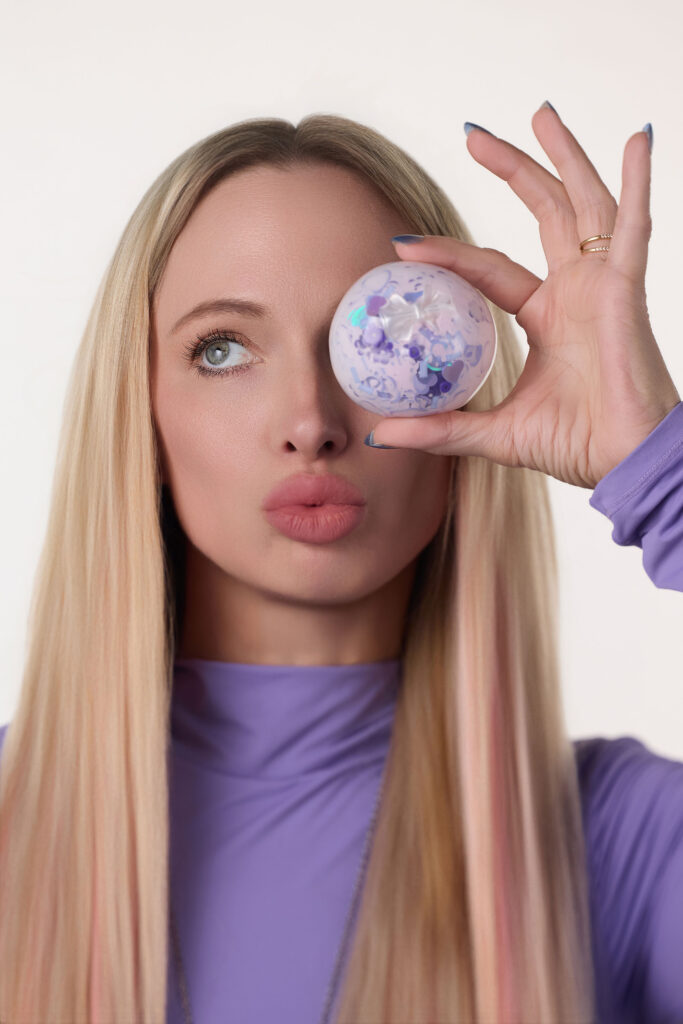
COOPER: What makes a Smushberry different from familiar stress balls or sensory toys?
HICKMAN: The biggest difference is texture. A traditional stress ball generally gives you one consistent sensation, while I design Smushberries around the entire sensory experience. Some are incredibly soft and gooey, while others are dense, crunchy, slushy or require much more hand strength. The possibilities inside are almost endless: different charms, shapes and types of fillings, using everything from natural elements to sandblasting glass. Each changes the way the ball moves, feels and sounds.
There’s also an ASMR element I never anticipated when I started. The sounds and repetitive movements can be just as satisfying as the texture itself. My customers often describe certain combinations as “scratching their brain,” and I completely understand what they mean. I’m constantly experimenting to find that unexpected combination that makes your brain go, “Ohhh, that feels good.”
COOPER: The Smushberry brand has such a distinct sense of humor. How much of the brand’s personality is simply an extension of your own?
HICKMAN: All of it! What you see from Smushberry is pretty much exactly what you get from me. I’m goofy, I don’t take myself too seriously and humor is a huge part of how I connect with people. I never wanted Smushberry to feel overly polished or corporate, because that wouldn’t feel authentic to me or to how this business began. I also think there’s something really fitting about combining humor with something people often reach for when they’re looking for comfort, sensory input or simply a little happiness. If aggressively squeezing a giant peanut makes you laugh while also giving your hands and brain something satisfying to do, even better. So the ridiculous names, weird jokes and slightly unhinged captions aren’t a carefully constructed brand voice.
COOPER: How do you develop a new Smushberry?
HICKMAN: There really isn’t one way. Sometimes I see a new squishy skin or shape that I think is adorable, and then I start imagining what could go inside it. I try to give each design its own sensory element rather than having every “crunchy” squishy feel exactly the same. Sometimes the inspiration is completely visual—I recently created one inspired by the look of a jade facial roller, and I have several in production inspired by beautiful desserts, with animal faces added for maximum cuteness. Other times, it starts entirely with texture. I’ll have a specific type of sensory feedback I want to create and experiment until I get there, then figure out what it should look like afterward. I think that constant back-and-forth between art and sensory experience is what keeps designing them so much fun.
COOPER: What does making these tools available to other families mean to you?
HICKMAN: That may be the most meaningful part of the business for me. I regularly receive messages from people telling me about a particular Smushberry or texture they connected with, and I pay close attention to that feedback. If I repeatedly hear that a certain texture gives people the sensory experience they’ve been looking for, I want to understand why and create more opportunities for them to find that feeling. It’s also one reason Smushberry operates through drops rather than keeping the exact same products available all the time. I’m constantly developing new textures, combinations and designs because sensory preferences are incredibly individual, and I want there to always be something new to discover. As someone with ADHD myself, I also understand the joy of novelty! Having something that began with my own family now reaching other people with similar needs feels incredibly full-circle.
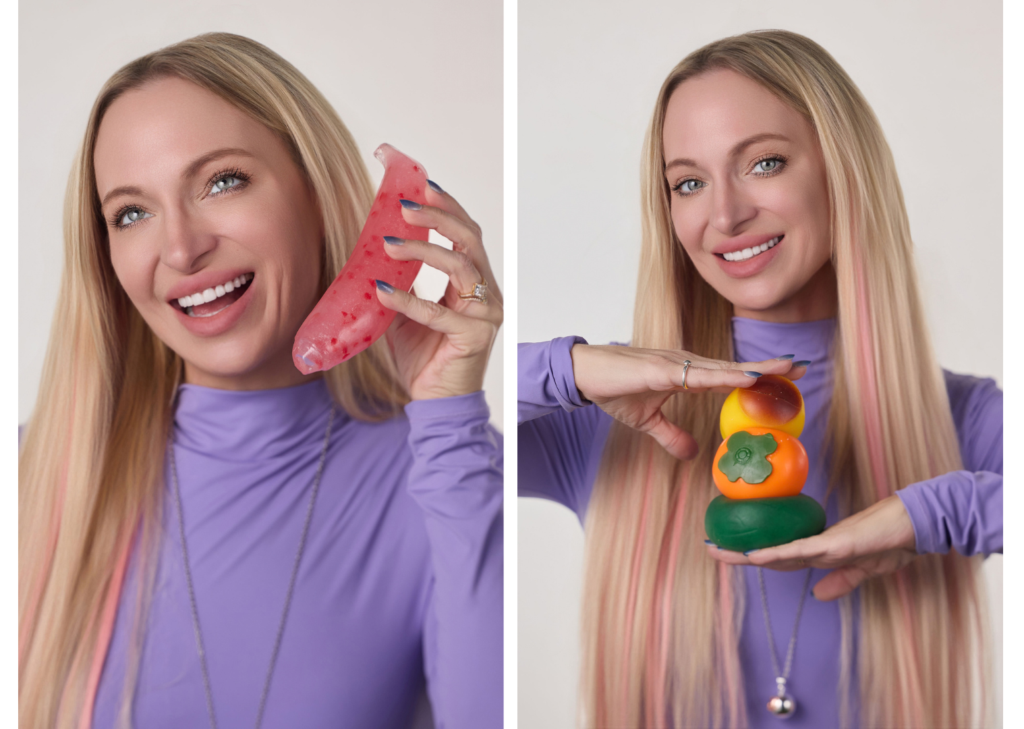
COOPER: What makes a Smushberry different from familiar stress balls or sensory toys?
HICKMAN: The biggest difference is texture. A traditional stress ball generally gives you one consistent sensation, while I design Smushberries around the entire sensory experience. Some are incredibly soft and gooey, while others are dense, crunchy, slushy or require much more hand strength. The possibilities inside are almost endless: different charms, shapes and types of fillings, using everything from natural elements to sandblasting glass. Each changes the way the ball moves, feels and sounds. There’s also an ASMR element I never anticipated when I started. The sounds and repetitive movements can be just as satisfying as the texture itself. My customers often describe certain combinations as “scratching their brain,” and I completely understand what they mean. I’m constantly experimenting to find that unexpected combination that makes your brain go, “Ohhh, that feels good.”
COOPER: Do your kids weigh in on new products?
HICKMAN: Absolutely! My kids are my most brutally honest product-testing team. My 5-year-old, Hays, loves pretty much every squishy, but especially the weird ones. I’ve made a couple of squishies using marbles with real bugs encased inside. I put the marbles inside unique skins with different types of transparent fillings; he thought they were “pretty awesome.” My 6-year-old, Vara, loves anything pretty and sparkly, but she also appreciates a really unique crunch. My 16-year-old, Bentley, is by far my toughest critic. He’s incredibly picky, and if he doesn’t like something, I’m definitely going to hear about it. My 12-year-old, Stiles, will often tell me exactly what he thinks could make a texture better, and I genuinely listen to his suggestions; he is incredibly creative.
I still make custom squishies specifically for them based on what they like and need, although I have to be a little more careful with what I make for the littles. Smushberry itself is designed and marketed for teens and up because many of our squishies contain small pieces, and most of the skins themselves aren’t made to withstand the enthusiasm of little hands. Little hands can make some very big squeezes, and we don’t like seeing kiddos with sad faces.
COOPER: Has building Smushberry changed the way you think about your own neurodivergence or the ways creativity and sensory needs can intersect?
HICKMAN: Absolutely. I think Smushberry has made me appreciate some parts of the way my brain works that can honestly be frustrating in other areas of my life. I tend to notice tiny differences, become intensely interested in things and have a very hard time leaving an idea alone once I’ve decided I want to figure it out. With Smushberry, those traits are actually strengths. I can feel a texture and immediately start wondering what would happen if I changed one element, combined it with something or pushed it a little further. My own sensory preferences also play a huge role because I’m not just thinking about how something looks; I’m constantly thinking about how it feels. Building this business has shown me that creativity and neurodivergence aren’t separate parts of who I am. In many ways, one fuels the other.
COOPER: Sensory products have become trendy well beyond the neurodivergent community. What do you think people are responding to about them right now?
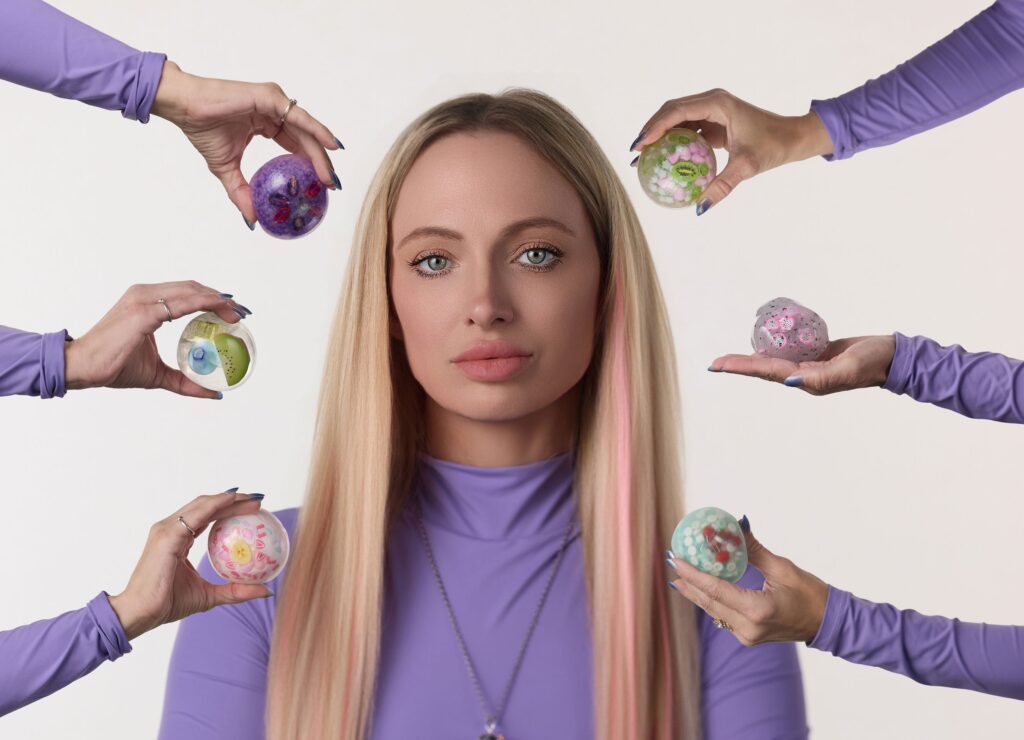
HICKMAN: I started Smushberry just before the NeeDoh and Schylling sensory-toy trend really exploded, and I remember thinking it was only a matter of time before people discovered handmade squishies. I think the unexpected textures are what initially grab people, especially the crunch. People hear it and immediately want to know, “What IS that?” But then they discover how incredibly different each texture can feel. Even a tiny change in particle size can completely change a crunch or slush.
I also love incorporating scent into the sensory experience, while keeping plenty of unscented options for people who are sensitive to fragrance. Sometimes I make the scents almost ridiculously realistic. I’ve made a bell pepper smell like a tomato vine being snapped and a rock smell like actual dirt! I think people are discovering how satisfying it can be to engage multiple senses at once.
COOPER: What has owning this business taught you about sensory focus and emotion regulation?
HICKMAN: Living in a predominantly neurodivergent family has taught me that something incredibly simple can sometimes make a very big difference. For us, having something tactile in our hands can give the restless part of the brain somewhere to go while the rest of the brain focuses on what actually needs our attention. I’ve also seen how certain textures can be grounding during anxiety or big emotions. There is something comforting about squeezing, manipulating and controlling something physically with your hands when everything else feels a little less controllable. And everyone’s sensory needs are different. One person may find a very soft texture calming, while someone else wants resistance, crunch or something they can really work with their hands. That’s actually become one of my favorite parts of Smushberry—creating completely different sensory experiences because there really isn’t one “perfect” texture for everyone.
COOPER: What do you hope Smushberry becomes from here?
HICKMAN: I hope Smushberry keeps growing without ever losing the experimentation and creativity that made me fall in love with it. I want to keep developing new textures, designing new products and exploring other kinds of sensory tools as I discover them. I’ve recently started incorporating Taba squishies, and I’m collaborating with Moonkatt Squishy on a completely different type called Frozen Butter Taba, which feels almost like clay. We’re even turning the Smushberry Kitty logo into an actual squishy you can hold in your hand, which is incredibly exciting. Ultimately, I would love to do this for the rest of my life and someday pass Smushberry down to one of my kids. I love the idea that what started as something I made for my family could eventually become a family business.
Contact: smushberry.com | @smushberry_