
Last Updated on July 6, 2026 by Evelyn Martinez
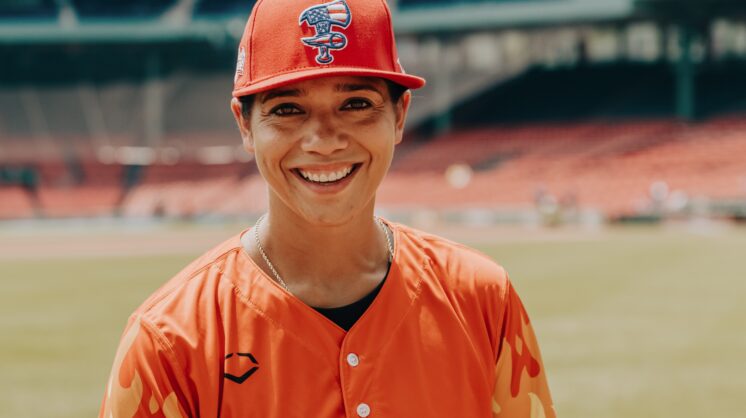
Most of Val Perez’s story takes place in the Coastal Bend. A Callalen native and former softball player at Texas A&M University-Corpus Christi, she went on to play on the Women’s National Team for USA Baseball while simultaneously serving as a firefighter and paramedic with the Corpus Christi Fire Department.
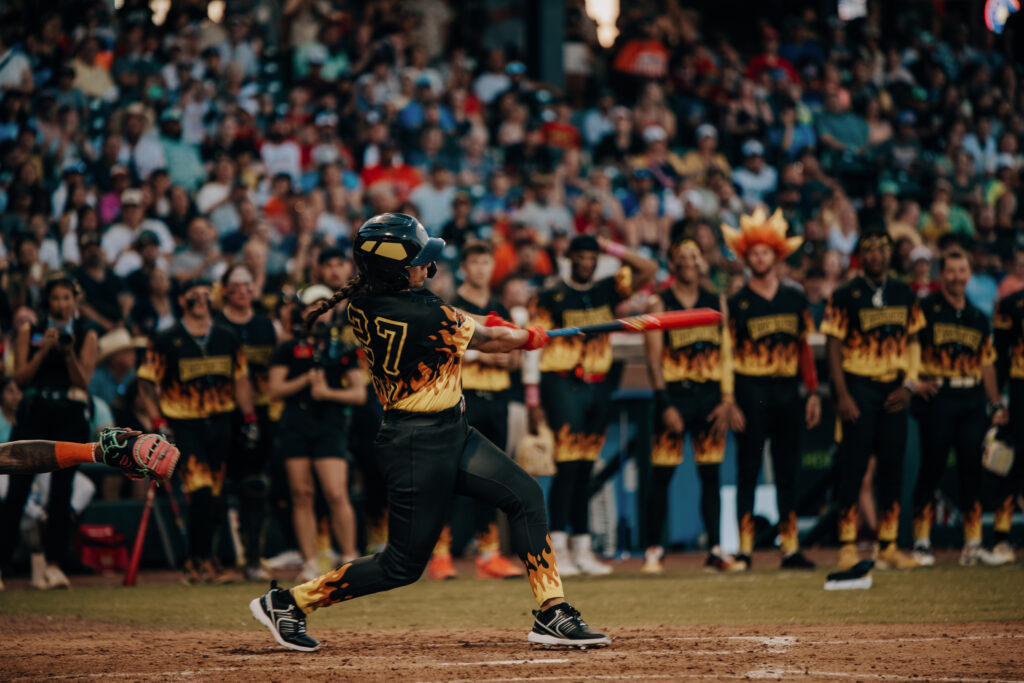
Today, she’s known to a growing national audience as the head coach of the Firefighters, one of the teams in the rapidly expanding Banana Ball universe. This specific journey from fire station to field wasn’t something she planned; a tryout, the launch of a team whose identity uniquely mirrored her own profession and a series of perfectly timed opportunities ultimately led her to the Banana Ball stage at an exciting time.
Having recently returned to Corpus Christi for a sold-out three game series during the 2026 Banana Ball World Tour, we dropped into the Firefighters’ dugout to talk culture, competition, why she’ll always love H-E-B and what it felt like to bring Banana Ball to her hometown.
This interview has been edited for length and clarity.
KYLIE COOPER: Let’s take it back to the beginning. How did the opportunity with Banana Ball first come about?
VAL PEREZ: I made Team USA with women’s baseball, and because of that, I got invited to a Banana Ball tryout. At the time, I really didn’t know much about it. I can’t dance, I can’t sing and I’d never done a trick play in my life, so I figured I’d just go have a good time and see what happened. After the tryout, they called and said, “As much as we’d love to see you in yellow, we have a team called the Firefighters, and you’re a real firefighter.” They asked me to join the team for its inaugural season, and eventually they called back to ask if I’d be interested in serving as head coach as well.
COOPER: The firefighter connection is such a wild coincidence. With 10 years as a firefighter and paramedic under your belt, what lessons translate most directly now to coaching?
PEREZ: One of the biggest things is learning how to control chaos. In the fire service, if you get sped up, you make decisions that aren’t ideal. You learn to control your heart rate, control your breathing and stay clear-minded in high-pressure situations. That’s just as important in professional sports. Whether it’s on a fire scene or in the dugout, you’re constantly trying to perform at your highest level while making good decisions under pressure.
COOPER: How have emergency services shaped your leadership style?
PEREZ: Culture is everything to me. In firefighting, you’re in the trenches with your crew. You build trust around the dinner table, after difficult calls and through shared experiences. It’s the same with a baseball team. We spend a lot of time together, and life happens outside the game. Building a strong culture means creating an environment where people genuinely want to be there for each other, both on and off the field.
COOPER: Speaking of culture, when you evaluate players, what matters most beyond talent?
PEREZ: I absolutely want to know what kind of player someone is, but I also want to know who they are as a person. Everybody is happy when things are going well. I want to know how someone responds when things aren’t. Are they lifting up their teammates? Are they handling adversity well? Those things matter because they directly affect culture, and culture affects everything.
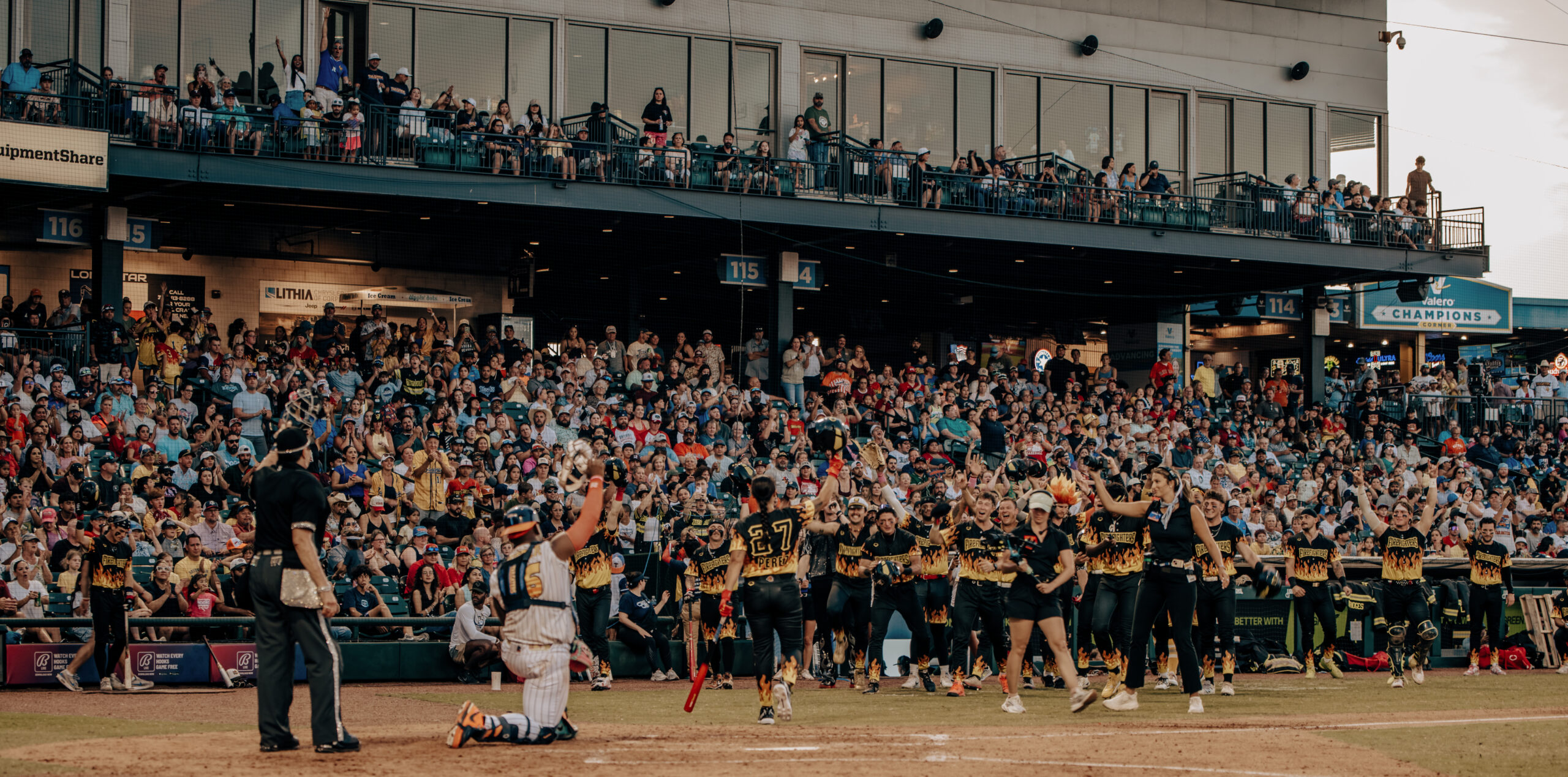
COOPER: Right, who you are off the field is just as important as who you are on the field. When it comes to the field, though, these guys are all top-tier athletes. Banana Ball is often known for its entertainment value, but what do people misunderstand about the sport?
PEREZ: The biggest misconception is that it’s all entertainment. Yes, there are dances and fun moments, but the level of talent on the field is incredible. These are highly competitive athletes playing under unique rules that actually increase the pressure. Every game matters, every inning matters and the competition is very real.
COOPER: What was it like returning to your hometown with the Firefighters?
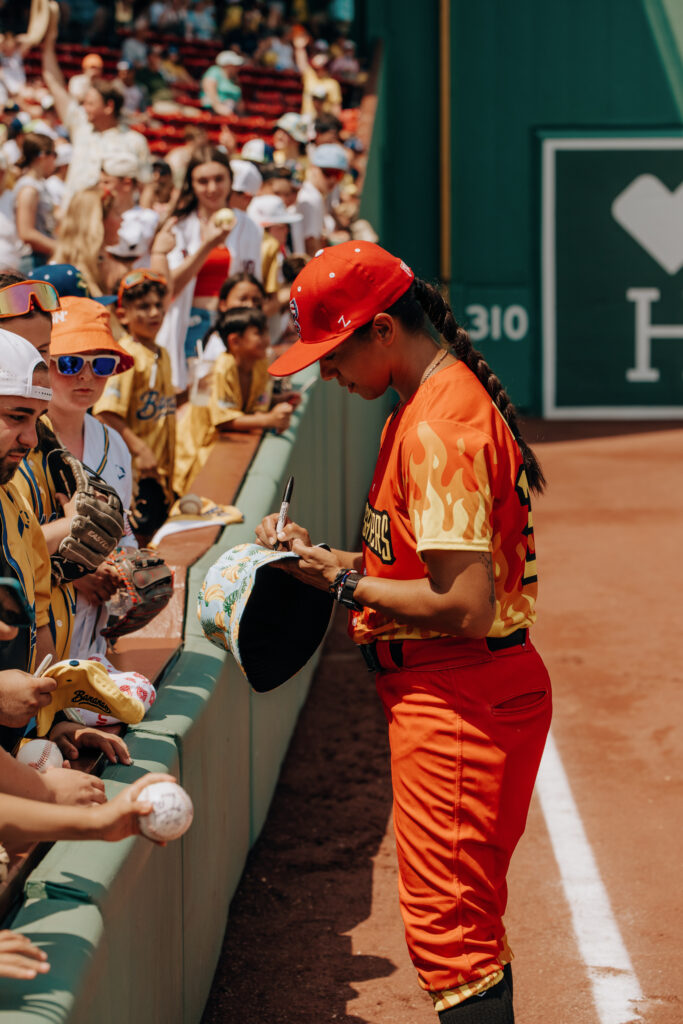
PEREZ: It’s been surreal. This city has been such a huge part of my life. I worked at Whataburger Field when I was in college, later worked EMS shifts here and spent years coming to games and events at this stadium. Being able to come back with a sold-out crowd, honor firefighters who impacted my career and share Banana Ball with people who supported me long before this opportunity came along has been incredibly special.
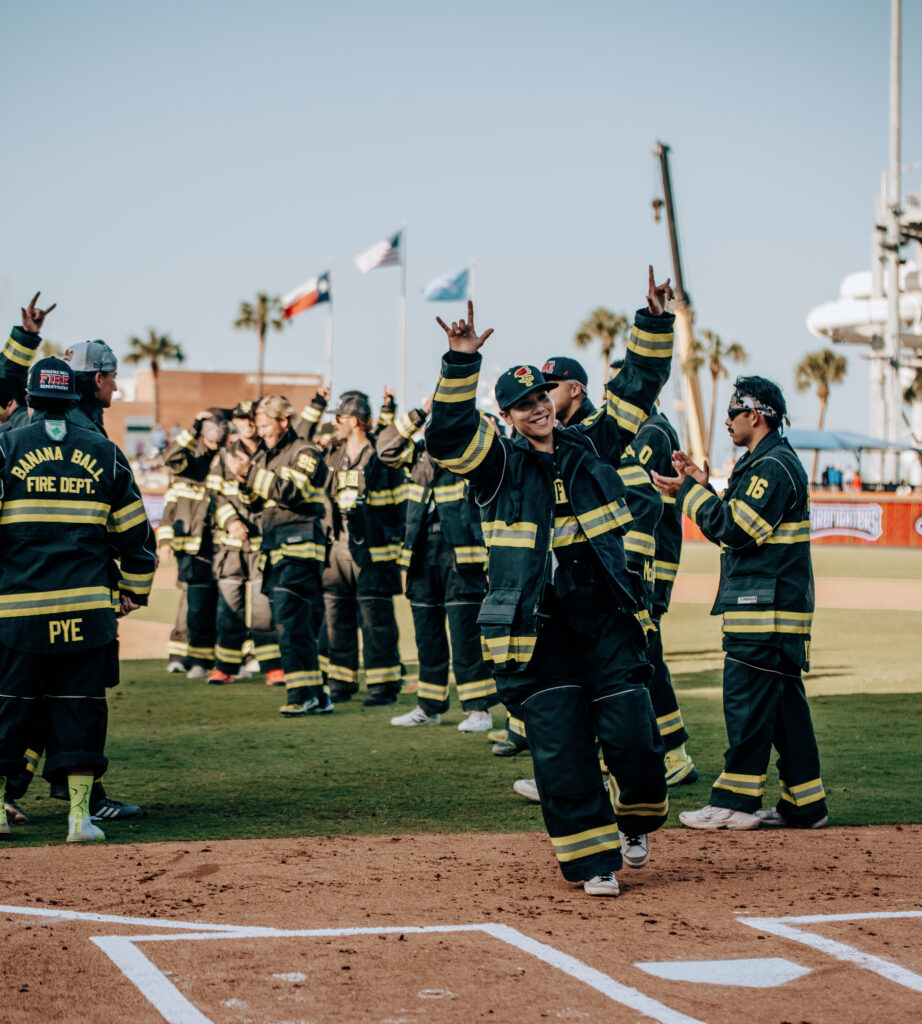
COOPER: Wow, so the Whataburger Field nostalgia is hitting right now! I bet it’s been exciting to see it so full during these games and to observe Banana Ball’s presence in your city. Where do you envision Banana Ball in five years?
PEREZ: I think we’ll absolutely be international. There’s already tremendous interest from places all over the world, and this year we launched our first Spanish-language broadcast, which opens up an entirely new audience. Baseball is deeply rooted in Latin America, and I think that’s going to continue to be a huge area of growth. I also think there will be more teams. What we’re doing right now is essentially building a sport from the ground up. That’s a pretty surreal thing to be part of. We’re still writing rule books, refining how the game works and figuring out what the future looks like. Jesse Cole always says we’re still in the first inning, and I think that’s the right mindset. The moment you think you’ve arrived is the moment you stop growing.
COOPER: It’s the classic scenario of living through “the good old days,” and knowing it’s the “good old days” allows you to truly enjoy the moment. What is it like to be part of something so significant in its early stages?
PEREZ: It’s pretty surreal. When you think about the creation of soccer or basketball or any major sport, it’s wild to realize that’s literally where we’re at right now. We’re helping build something from the ground up. Last year, we didn’t even have a rule book. We had ideas of what things should look like, but now we’re defining what a trick play is, creating standards and figuring out how the game continues to evolve. People always talk about the “good old days,” but they usually don’t realize they’re living in them at the time. The cool thing about this era is that so much of it is being documented. There are videos, social media, articles and photos capturing all these moments as they’re happening. Hopefully, when I’m 70 or 80 years old, I can look back and think, “Wow, that was pretty incredible to be a part of.”
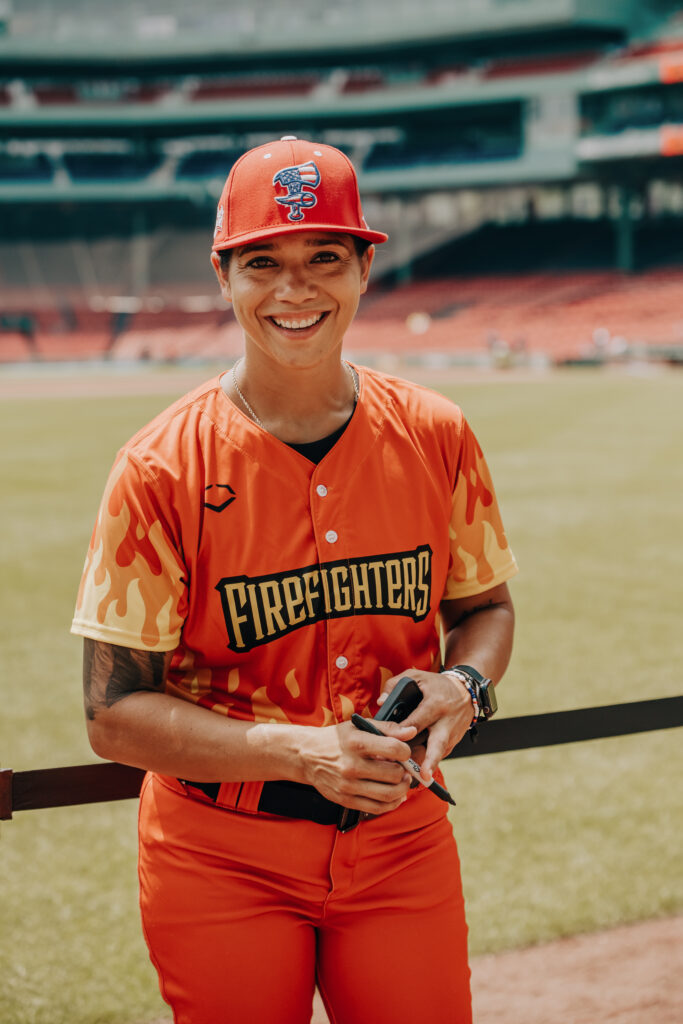
COOPER: What does balance at this point in your life look like?
PEREZ: I try to integrate my family into this life as much as possible. The more my wife and kids can be around the organization, the better. One of the things that stood out to me early on was how much this organization truly operates like a family. From the ownership group all the way down to the interns, people genuinely take care of each other. They understand that if your family is doing well, if you’re healthy and supported, you’re going to perform better. That’s true for players, coaches and staff. As a parent, I appreciate that because it allows me to bring my family into this experience rather than constantly feeling like I’m choosing one thing over another.
COOPER: Alright, I have to ask. When you’re back in Corpus, what spots are you making sure to visit?
PEREZ: The first answer is H-E-B. We don’t have one in Georgia, and my wife and I literally walked down every aisle when we got into town. After that, it’s Jalisco Grill, the Taco Stand in Flour Bluff, Whataburger and usually some barbecue from my brother. There’s just something about South Texas food that feels like home.