

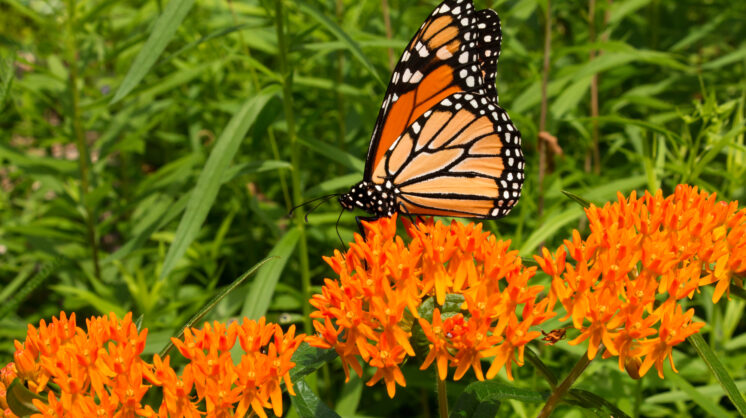
The cold weather of December is the ideal time to dream of spring butterflies, and butterfly weed is the best plant to attract monarchs to your garden during their fall and spring migrations.
Butterfly weed is characterized by its long, upright, fibrous stems and coarse gray-green leaves, topped with vivid clusters of orange flowers. Historically, Native Americans used the plant’s tough stems to weave durable cords and rope.
Remarkably durable in the garden once established, this plant owes its resilience to the deep taproot. Although initial growth can be slow, it is exceptionally easy to cultivate. Historically, Native Americans used the plant’s tough stems to weave durable cords and rope, as well as the plant’s taproot to treat pleurisy, asthma and coughs.
Milkweed is essential for monarch butterflies, with butterfly weed being a favorite variety. The decline in Monarch populations is linked in part to the decrease in milkweed, their natural habitat. By incorporating more butterfly weed into our Coastal Bend landscapes, we can help ensure more of them survive.
Monarchs pass through our region during their fall and spring migrations, with the fall migration peaking in October and continuing into November; spring migration begins in March and peaks in April and May. Plant milkweed in your landscape now to host the passing monarchs this spring.
Gardener’s Notes
Growing Up: Height, 18” to 24”. Plant from transplant in full sun. Butterfly weed thrives in well-drained soil and tolerates some dappled evening shade; however, excessive shade will impede its growth and reduce flowering. When planting, incorporate several inches of organic compost around the base, and repeat this process each spring. Fertilize with pastured poultry manure. Initially, growth may be slow, but the plant becomes very durable once established. It is extremely drought-tolerant; water only until established, as this plant withstands the worst of summer heat. Cut it back following a hard freeze. Butterfly weed is generally pest-free.
Profiling: Butterfly weed can be leggy with long, upright stems. It is best when companion planted near other drought-tolerant and pollinator-attracting plants, such as flame acanthus, salvia, shrimp plant and lantana. The branches of these plants can grow intertwined and form a dense and vibrant mix of colors. Firebush and plumbago make a great backdrop for these plants. The combination of these plants will attract an amazing air show of butterflies, hummingbirds and other pollinators.
Fun Facts: The monarch butterfly migration is one of the loveliest phenomena of the year in the Coastal Bend. Monarchs lay their eggs exclusively on milkweed plants, as the caterpillars feed on the leaves and the adult butterflies drink the nectar of the flowers, which make Monarchs poisonous to their predators. Butterfly weed is home, food and self-defense for Monarchs.