


Last Updated on October 10, 2025 by Evelyn Martinez
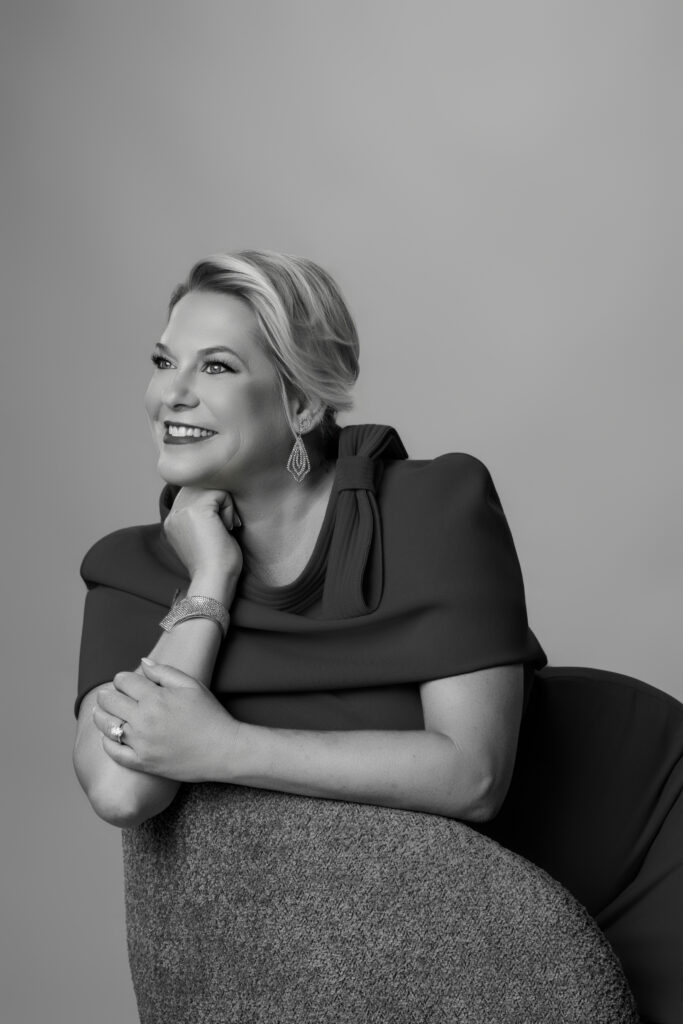
The hum of activity at the Ronald McDonald House feels like a heartbeat: families gathering in the common room, children playing, volunteers greeting newcomers with warm smiles. At the center of it all stands Michelle Horine, Chief Executive Officer of Ronald McDonald House Charities South Texas (RMHC).
Horine’s journey to leadership has been anything but linear. Drawn to Corpus Christi after college by a journalism job, she followed detours through conservation work, tourism promotion and eventually nonprofit service. Each stop along the way gave her new tools that would one day converge in her role at RMHC South Texas. More than a decade later, she has become the driving force behind an organization that offers comfort at life’s most vulnerable crossroads.
From the start, what made Horine stand out as a leader wasn’t just her resume. It was her ability to think beyond the present moment, to anticipate needs and to build structures that last. She isn’t content to simply keep things running; she wants to ensure that the Ronald McDonald House will continue to be there for families decades into the future.
The Corpus Christi House, originally a 25-room facility, serves as a sanctuary for families staying close to Driscoll Children’s Hospital. For parents whose children are undergoing serious medical treatment, the house is a roof over their heads, as well as a place where they can rest, share meals and find community during the hardest days of their lives. Horine is in the midst of leading an ambitious capital campaign to nearly double the House’s capacity to 45 rooms, recognizing that the demand far outpaces the current supply.
“We don’t have enough rooms,” she admitted plainly, her voice equal parts urgency and determination. “Our goal is to serve every family who needs us. No waitlists.”
The mission of Ronald McDonald House has never been just a professional calling for Horine. It’s personal, too. Her own children grew up witnessing the demands that came with their mother’s work. They remember late-night phone calls tending to urgent needs at the House and how she carried that responsibility with grace. Even from home, they could see how deeply she cared for the families she served.
“My kids don’t remember a time when service to my community wasn’t part of my life,” she reflected. “They may not have been at the House every day, but they felt its presence. They saw the sacrifices, the joy and the meaning behind the work. I think it showed them what it looks like to be there for others, even when it isn’t easy.”
That perspective has left a lasting mark on all of them. For Horine, it reinforced that her role at the House is part of who she was as a mother and a leader. It taught her to approach both family and work with patience, empathy and resilience. For her children, it instilled compassion and a sense of responsibility to others—lessons that reach far beyond a classroom.
“This place is more than a building,” Horine explained. “It’s hope in action. Families don’t choose to have a sick child. But when they need support, we make sure they’re not alone.”
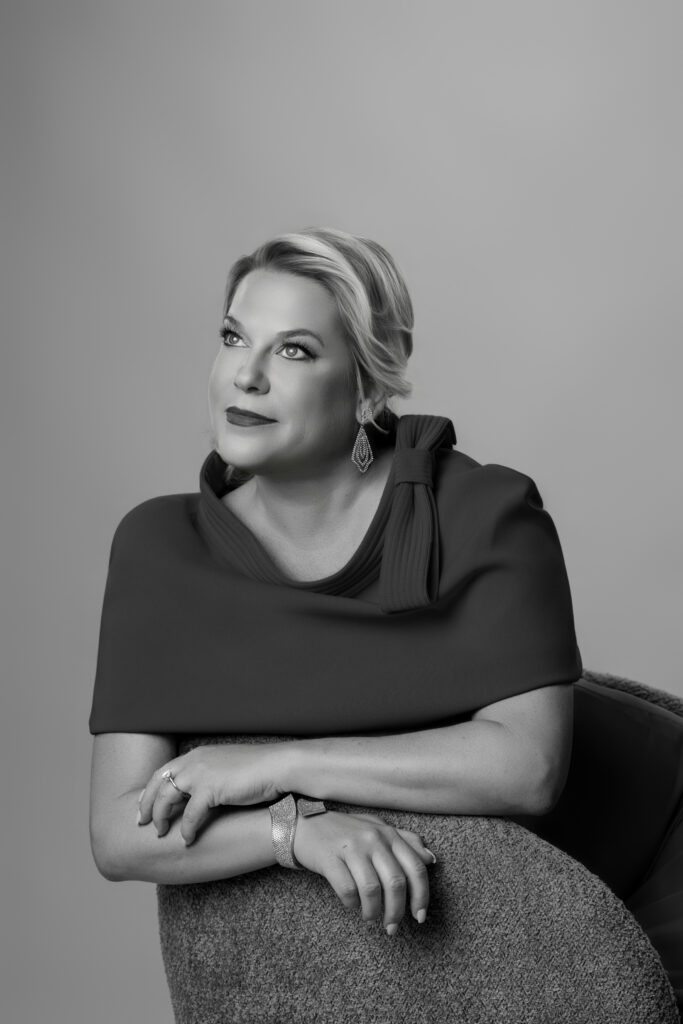
Her days are long, often stretching into nights filled with fundraising calls, strategy sessions or community meetings. But Horine insists she finds energy in the mission itself. “There are definitely hard days,” she admitted with a laugh. “But then a child will come up to you with a smile and suddenly you remember why you’re here.”
That mix of pragmatism and hope is what makes her such a natural visionary in the community. She has the ability to see what doesn’t yet exist—more rooms, more services, more compassion—and rally people to help bring it to life. Yet she never loses sight of the smaller, quieter victories: a moment of rest for a tired parent, a meal that eases one night’s burden or the simple reassurance that someone else cares.
Horine looks at a bulletin board in her office covered in photographs of children who once stayed at the House. Some of them have grown up healthy and thriving, and return just to say thank you. She points to one photo in particular, a child who once clutched a toy in the House’s living room, now smiling confidently as a teenager. “Every single picture here is a story,” she said softly. “These kids remind me why we can’t stop dreaming bigger.”
For Michelle Horine and RMHC South Texas, the future is clear: expand capacity, extend reach and anchor families in compassion. Beyond the walls of the House itself, she is exploring ways to broaden effectiveness, from mobile clinics that deliver care directly into communities to new programs that ease the emotional toll of long hospital stays.
Her vision is rooted in empathy and buoyed by community, and it is already changing lives one family, one dream and one community at a time.