

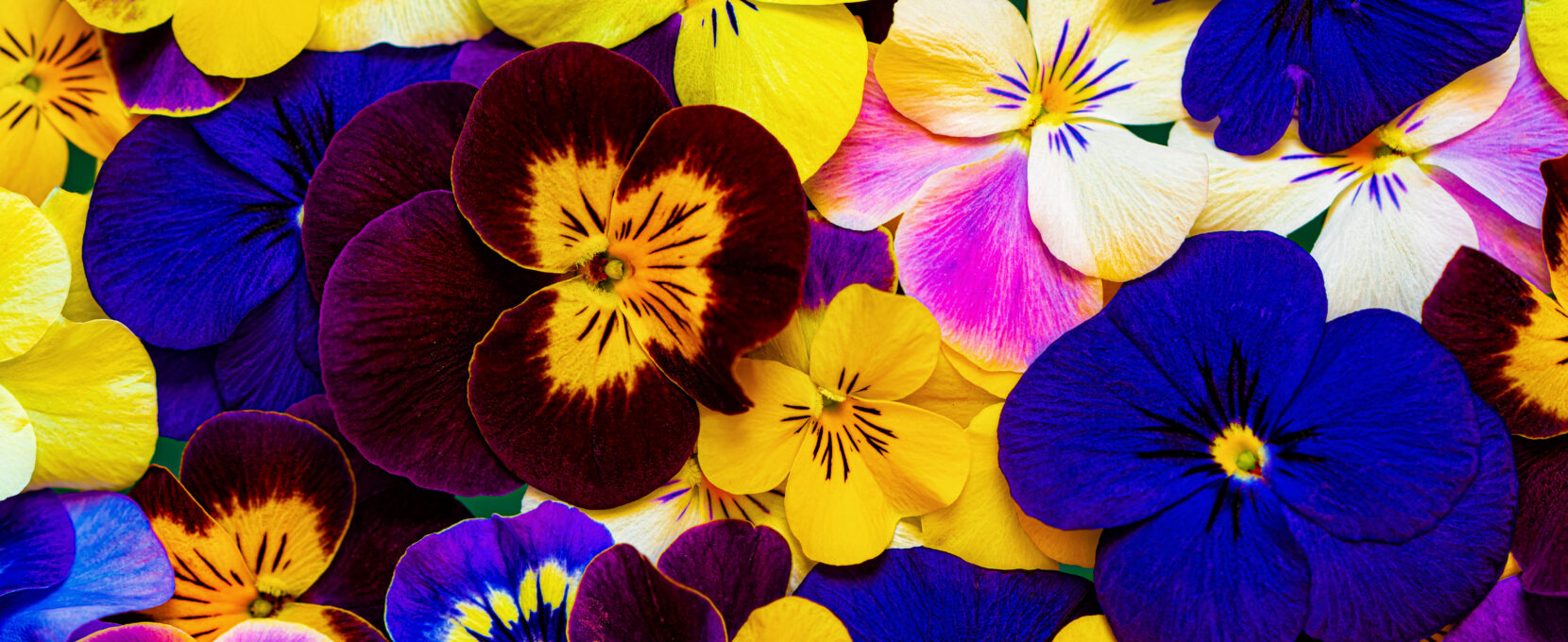
Pansies are a perfect choice for a January planting in any Coastal Bend garden. These gorgeous, colorful flowers are easy to grow and, surprisingly, are also delicious!
Native to Europe, the pansy became highly popular in Victorian England, establishing itself as a staple of country and estate gardens. The flower’s prominence in this era is evident in the works of Victorian artists, who frequently depicted women in their pansy gardens. The period also saw significant development from British scientists, who created many new pansy hybrids, accounting for the wide variety of colors available today.
The vibrant spectrum includes red, blue, white, yellow, pink, purple, orange and multi-colored. Mixing and matching color varieties creates a stunning visual effect for your landscape. Pansies also come in clear-faced and monkey-faced patterns; the latter has a dark splotch of color in the center of the flower that adds another level of interest to these cold-weather blooms.
Once you discover their delightful flavor, you’ll want to ensure a patch of pansies is always growing in your winter garden for your kitchen.
A wonderful potted plant, these flowers struggle indoors unless placed in the sunniest window of the house. Place potted pansies on the porch or deck with at least six to seven hours of direct sunlight per day. Deer are attracted to pansies, so it’s advisable to grow them in pots if your landscape is prone to deer visits.
Gardener’s Notes
Growing Up: Spacing, 6” to 9”. Height, 6” to 8”. For quicker root establishment, select compact transplants; leggy plants require more time to take hold. Pansies need full sun and very rich, well-drained, moist soil. Prepare the bed by adding 4” of organic compost, plus a mixture of half a cup of pastured poultry manure and half a cup of homemade wood ash per square foot. Finish by adding a 2-inch layer of native leaf mulch around the base of the plants. Water daily for the first week, every other day during the second week and then twice per week thereafter.
Profiling: To encourage new growth, frequently deadhead pansies from the time you transplant them until the heat of April causes the flowers to die back. If the pansies develop a strong root system, they can withstand a freeze and quickly recover. Just before a freeze, thoroughly water the soil. If a freeze occurs, cover the plants with a blanket overnight if necessary. Taking cut flowers often also stimulates new growth. Clip the flowers at the base, but be sure to only remove up to one-third of the flowers at a time.
Fun Facts: Pansies offer a mild sweetness and a distinctive herbal note, making them a delicious garnish for various dishes, from pasta to lamb, and a vibrant addition to salads. If you enjoy cooking with edible flowers, other winter bloomers that complement pansies both in the garden and the kitchen include nasturtiums, calendula and violas. Winter herbs such as blue borage, chamomile and chives are also excellent companions.