

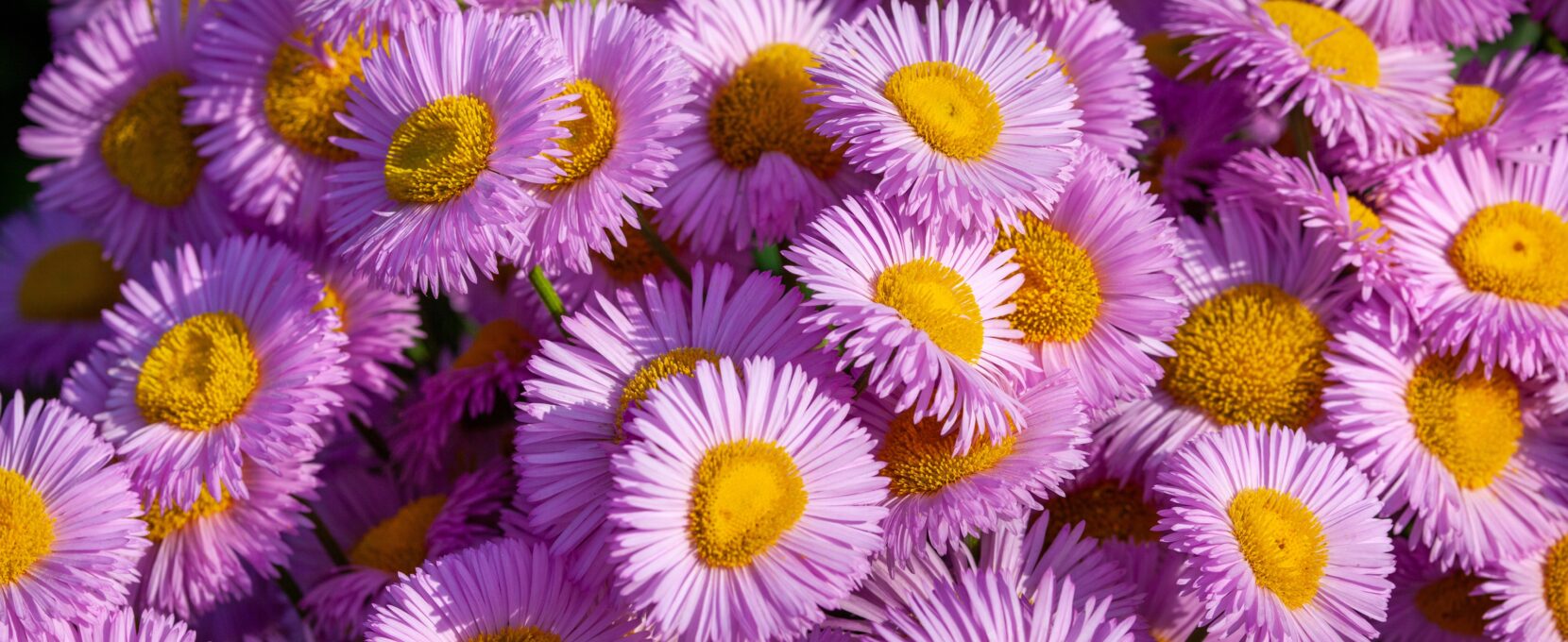
Asters are superstars in Coastal Bend gardens. These easy-to-grow native perennials produce dense mounds of gorgeous purple flowers with yellow centers, atop stiff green stalks.
The name aster is derived from the Greek word for star. In the Greek myth, the goddess Astraea rose to the heavens to become the constellation Virgo. Her sadness in the empty darkness caused her tears to fall to earth as aster flowers.
Asters, with their delicate purple blooms, hold a rich history. Native Americans used them extensively for herbal medicine, and they experienced a surge in popularity in Victorian gardens, frequently appearing in artwork of that period. These plants are indigenous to the prairies of Central and South Texas, and can now be found growing profusely along Texas Hill Country roadsides during both spring and fall.
Fall asters offer a dual benefit to your garden: Their nectar attracts bees, and their dropped seeds provide food for birds. Growing in dense mounds, they create a natural habitat, drawing in beneficial predators like frogs, toads, ladybugs and lacewings that help control garden pests.
Asters go well with mistflower, Texas mountain laurel and plumbago. These blue flowers have similar watering requirements, which prevents overwatering.
As cut flowers, asters can last up to a week in a vase; however, refrigeration is not recommended. Snip near the base of the stem for ideal arrangements.
Gardener’s Notes
Growing Up: Spacing, 12” to 18”. Height, 12” to 36”. Plant from transplant in full sun; tolerates some evening shade. Does well in sandy loam soil. Soil must be very well-drained; avoid clay-rich soil. Add several inches organic compost and two cups pastured poultry manure per plant when planting and again each spring. Water regularly until established. Drought-tolerant; do not overwater. Plant near other drought-tolerant plants. Mulch with native leaves. No pests.
Profiling: Asters propagate via stolons, which are horizontal stems that grow from existing plants and root to form new ones. Healthy asters can quickly form a dense ground cover. In the spring, transplant asters to new locations by using a shovel to cut new stolons. To encourage growth, take cuttings frequently, up to 50% of the existing flowers. After the first frost, cut all flowers back close to the ground to stimulate spring growth.
Fun Facts: For centuries, Native American tribes made use of native aster varieties in herbal medicine. The Cherokee, for instance, brewed aster-infused tea to alleviate fevers. The Iroquois prepared a similar tea, combining asters with bloodroot, to serve as a laxative. Various tribes also created aster poultices to treat wounds and skin irritations like poison ivy. The Potawatomi used burning asters to revive unconscious individuals, while the Chippewa burned aster roots to attract game during hunts.