
Night at the Surf Club
Inside the Executive Surf Club, a storm brews over the lunch rush.
“You gotta think, the crowd is going from kids, families and tourists to this almost pre-storm energy,” said Richard Lomax, current CEO and second-generation steward of the Water Street family enterprise. During Surf Club’s nostalgic “golden age” back in the ’90s and early 2000s, Lomax came of age to the smell of fried shrimp and the sound of rock music.
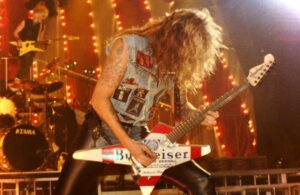
At its peak, Surf Club became an unlikely tour stop in a corner of South Texas few national acts found reason to visit. Older locals still tell stories of the Texas country and Tejano legends who graced the coveted patio stage, the Robert Earl Keens and Flaco Jiménezes of it all. No Texas bar survives without its nostalgia-driven regulars.
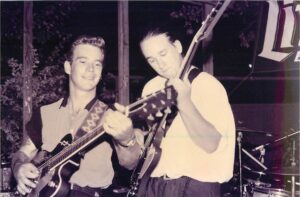
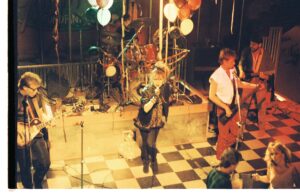
But for Corpus Christi, the arrival of a venue run by punk rockers brought an underground scene into public view. The hardcore, “do-it-yourself” culture of collaboration laid the foundation for the success of legacy venues like Surf Club, Concrete Street Amphitheater and House of Rock. From bookers and sound guys to bartenders and cooks, with each staff member came the relationships, work ethic and community that continue to define Corpus Christi’s live music scene today.
The Other State of Mind
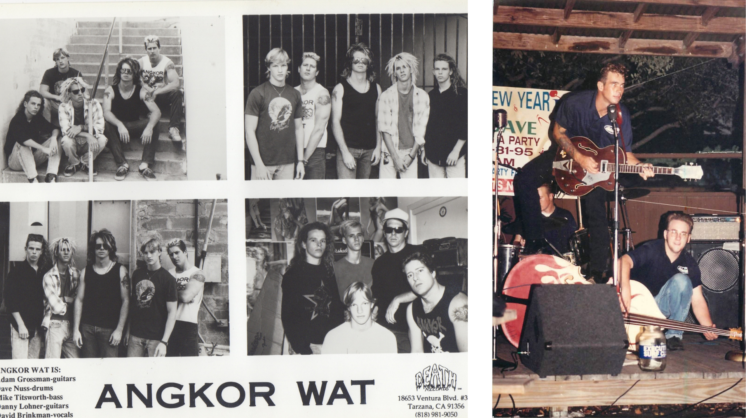
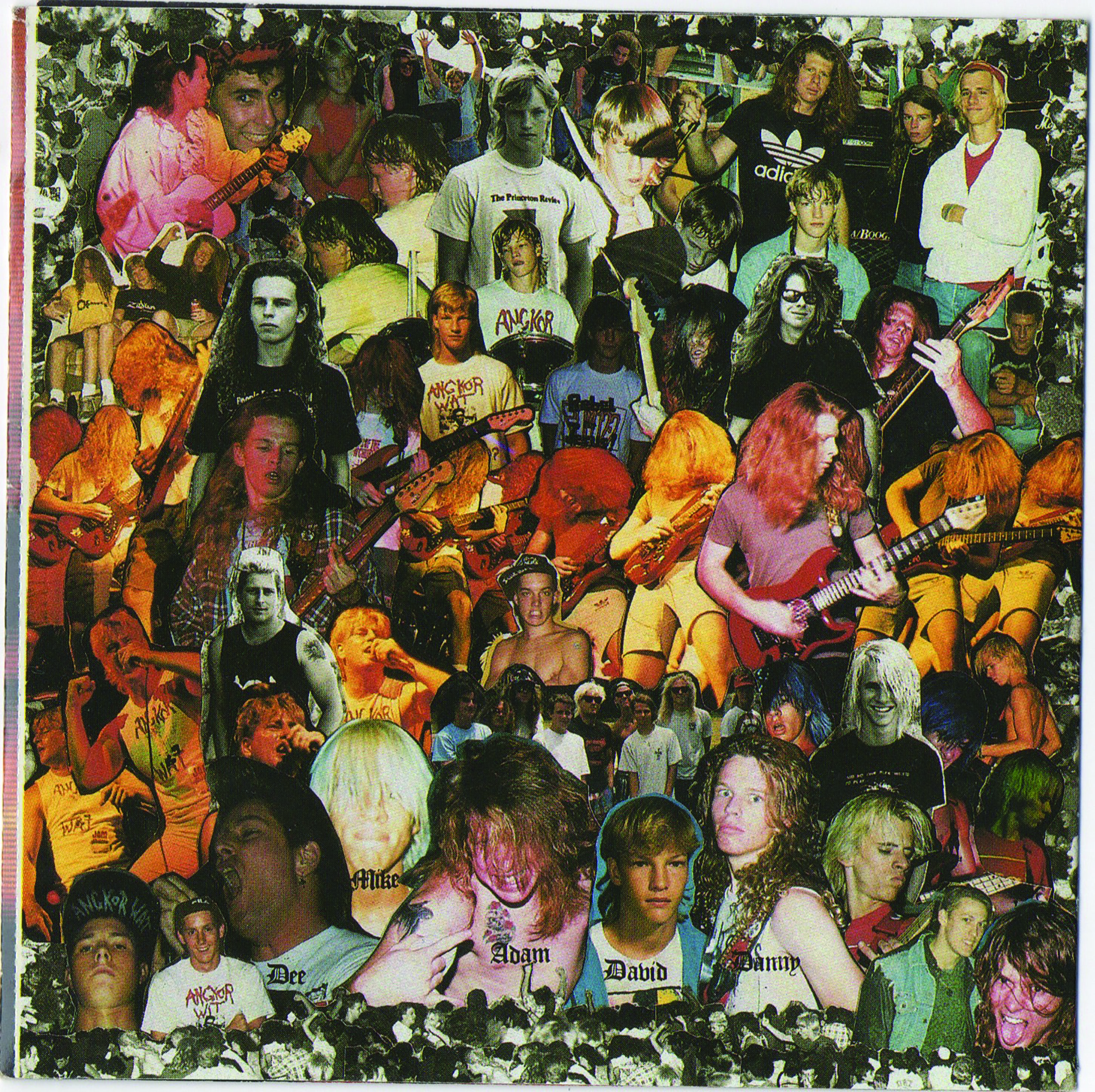
Richard Guerrero traces the year punk broke in Corpus Christi back to Angkor Wat’s legendary 1986 performance, when a generation tired of glam rock and hair metal clung onto something grittier, dirtier, angrier. Guerrero, a journalist, documentarian and member of renowned local punk band The Krayons, presents a retrospective on Corpus’s underground music scene from 1979 into the late ’90s in his documentary SubCCultured: The Rise of DIY Rock in Corpus Christi. Although Corpus’ older scene had already spent years throwing shows in VFW halls and makeshift venues, he noted how high school teenagers like Jesse Gomez led the arrival of the hardcore DIY scene that began to attract touring bands.
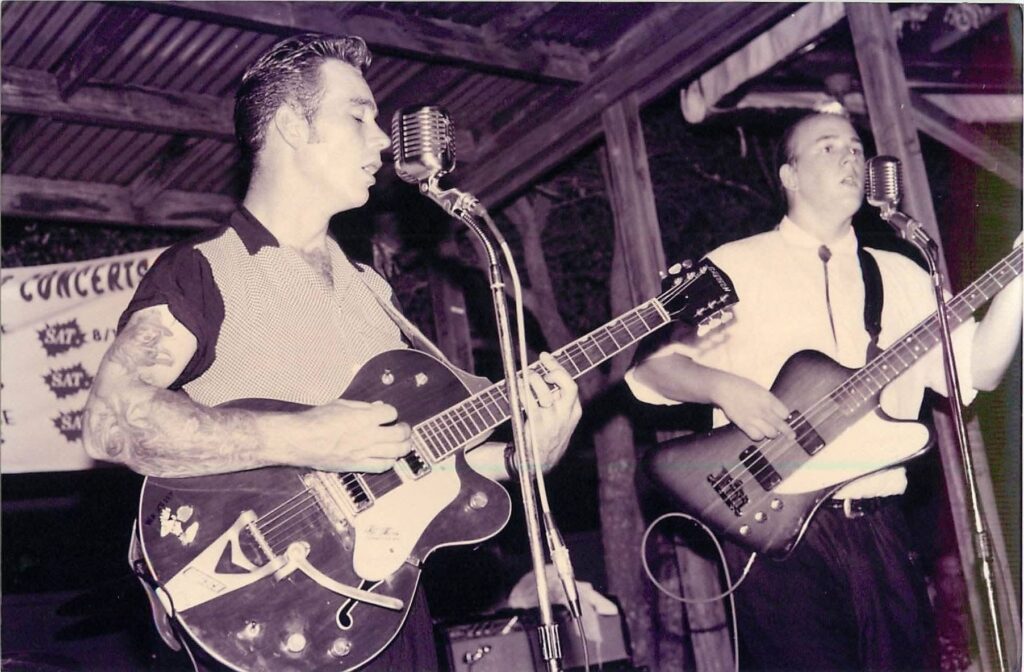
“I was in a band, The Wrong Crowd, and there was really nowhere to play at the time,” Gomez said. “I mean, there was, but we were 17 years old. I got the hall together, I got the band together, I got the sound, I got the lights, put out the fliers. We all pitched in and I rented it, the American Legion (Hall) on Kostoryz.”
Gomez’s story sticks to an almost universal truth of the scene at the time: High school punk rockers wanted somewhere to listen to and play hardcore music. Musicians like Gomez often worked double duties in response to demand, fully adopting the “do-it-yourself” mentality. Band members would double as bookers, zine makers, photographers and sound techs. They organized among themselves; split the cost and labor; and did what they had to do to perform.
“Back then, we preached a lot of unity,” Gomez said. “We took the risk together.” By the late 1990s, the risks began to pay off, and by the turn of the century, the scene exploded. Corpus stages, from Southside dive bars to thousand-cap venues, became a rite of passage for bands putting in their time on the small Texas tour circuit.
As Corpus gained an attractive reputation through zines and word of mouth, bookers like Gomez started fielding calls rather than making them. Alongside childhood friend Arnulfo Gutierrez, vocalist for another famed Corpus band Drastic Actions, Gomez continued booking bigger and bigger touring bands and stuffing bills with local acts while Gutierrez served as host and show opener.
Between the crowd-drawing country and Tejano stars, artists like Agnostic Front, Yellowcard and Green Day all played our local stages before selling out arenas. The local DIY world, with its rituals and opening bands, made its way onto bigger stages. The underground had finally come up for breath.
Friday Night Lights
“From my perspective, [the golden era] was during the mid- ’90s [up until] 2004 or 2005,” Lomax said. During the afternoon rush, as we sat and talked in June 2026, the room looked pretty much as it did when Blue October played a sold-out show on the same patio 24 years ago.
Surf Club’s arrival had marked a turning point in live music for Corpus locals by the time future House of Rock owner Casey Lain arrived for his first Friday night bartending shift in 1995. By the 4 p.m. happy hour, the changing tide began as the crowd turned from families and businessmen to listeners sporting tattoos and blue mohawks.
“It was a melting pot,” Lain described. “The police officers, the families, the surfers and the people that worked in the area all came through, but then a lot of young people would show up for the music, the dancing and the fun. It was the spot where you would meet up on Friday, have some food, watch the band—and then you’re either going home or you’re making plans to go to the next spot.”
Under Thurman Love, general manager when Lain arrived, Surf Club built its reputation on Texas country, Tejano and singer-songwriters before gradually making room for louder, rock-driven acts. Love set the standard for booking live music at Surf Club, making it easy for Lain to take over and hit the ground running.
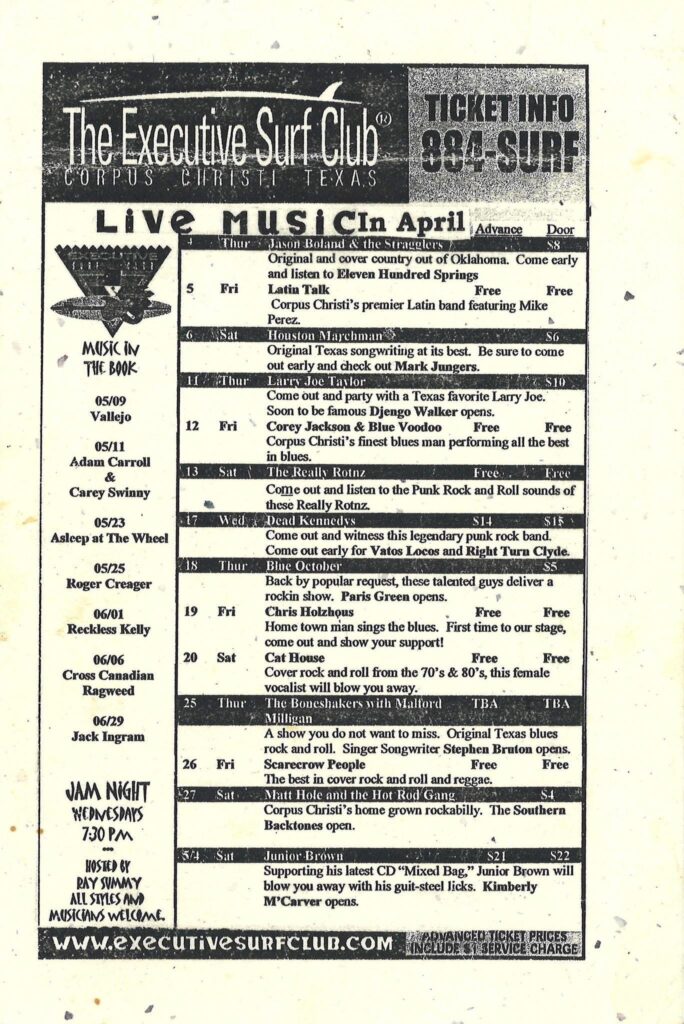
“I remember at one point I was giving him grief because we were the Executive Surf Club, and he kept booking these folky guys, sitting around, telling stories,” Lain said. “By the time I rolled in, we started sneaking a little bit of Blue October and Vallejo and a little bit more of the rock stuff. And then downtown changed.”
By the mid 2000s, Surf Club’s once lonesome nebula of live music had added a few venues to its cluster: Concrete Street in 2001, House of Rock in 2005 and Brewster Street in 2006. While some classic country and Tejano musicians made their rounds, the first few years of the city’s largest, most enduring venues screamed along to the sound of hardcore.
“We got to book Rise Against before Rise Against was Rise Against,” Gomez said of his and Arnulfo’s time booking shows at Concrete Street. Lifetime DIY-ers, Gomez and Arnulfo stayed shopping for the right venues for their ever-growing punk acts, and the arrival of Concrete Street meant a new demographic that pushed past the hundred-cap bars and clubs. “We got to book Yellowcard before Yellowcard was Yellowcard.”
House of Rock became another bridge between the underground and the mainstream. Gomez helped shape its early identity, bringing the same DIY instincts he’d honed for years booking hardcore shows. Lain would later build on that foundation, helping the venue become one of Corpus Christi’s longest-running homes for live music.
Now, though expansion has slowed and the city itself remains off major tour routes, these pillars of our live music scene stand tall and proud––and have never stopped working to bring quality shows to the Coastal Bend. When looking back at its level of advancement, the sheer size of DIY showgoers and Surf Club punks, and the bands who just passed through, we tend to ask, “What happened to the music scene?”
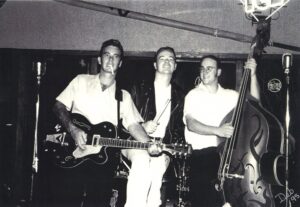
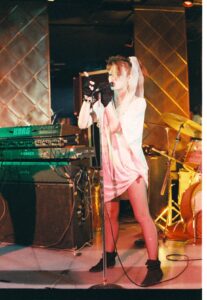
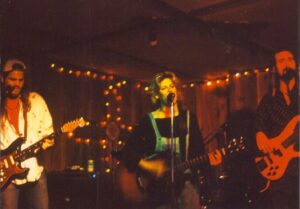
Almost Famous
On the surface, one can easily credit the boom to a single venue or booker. But Water Street patriarch Brad Lomax himself credits his success in the live music world as one only possible thanks to the vibrant ecosystem he found himself in.
“I think the time was right and the place was right for Casey Lain and other people who worked for us to develop a live music program,” Brad said. “I’m not gonna tell you that I had this vision [from the start], but it happened, and we were very successful at it. When you do that, other people emulate your success.”
At the center of it all were the same people—bands, promoters, stagehands, zine makers and fans who had spent years building the DIY underground before finding themselves shaping the city’s biggest stages. Gomez kept booking shows throughout his life, earning a reputation that caught the attention of his then-manager, Stanton “Stan the Man” McGrath, who invited him to help shape the vision and approach of House of Rock. Bill “Dusty” Durrill of Concrete and Brewster Street turned to local DIY booker and longtime friend Jerry La Touf to help bring Concrete Street to life after realizing its natural bowl shape made the spot ideal for a concert venue.
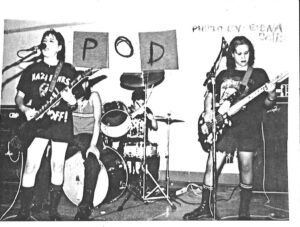
Everywhere you look in Corpus, hardcore stares right back.
Encore
Executive Surf Club proved that a restaurant could afford to take chances on live music. Concrete Street showed national tours that Corpus Christi could fill larger rooms. House of Rock became the bridge between underground credibility and professional production. Now, over 20 years in, the once-new kids on the block are the elders, and the founding members of the underground music scene have become the status quo.
Locals built the city’s golden age of live music with their bare hands. After the pandemic’s reset, a new generation finds itself on the same beaten path. Kids of the 2010s punk scene are forming hardcore bands like Ghosthouse.
Stage technician Noe Ybarra invested in the music scene through The Artisan, a new production lounge built for live music. Casey Lain continues to mentor the next wave of promoters, bookers and venue operators. “People ask, ‘What can I do to help the scene?’” Lain said. “Man, go see a show.”
Take a chance on live music in Corpus. You might find yourself in the next golden era.