

Last Updated on July 7, 2026 by Evelyn Martinez
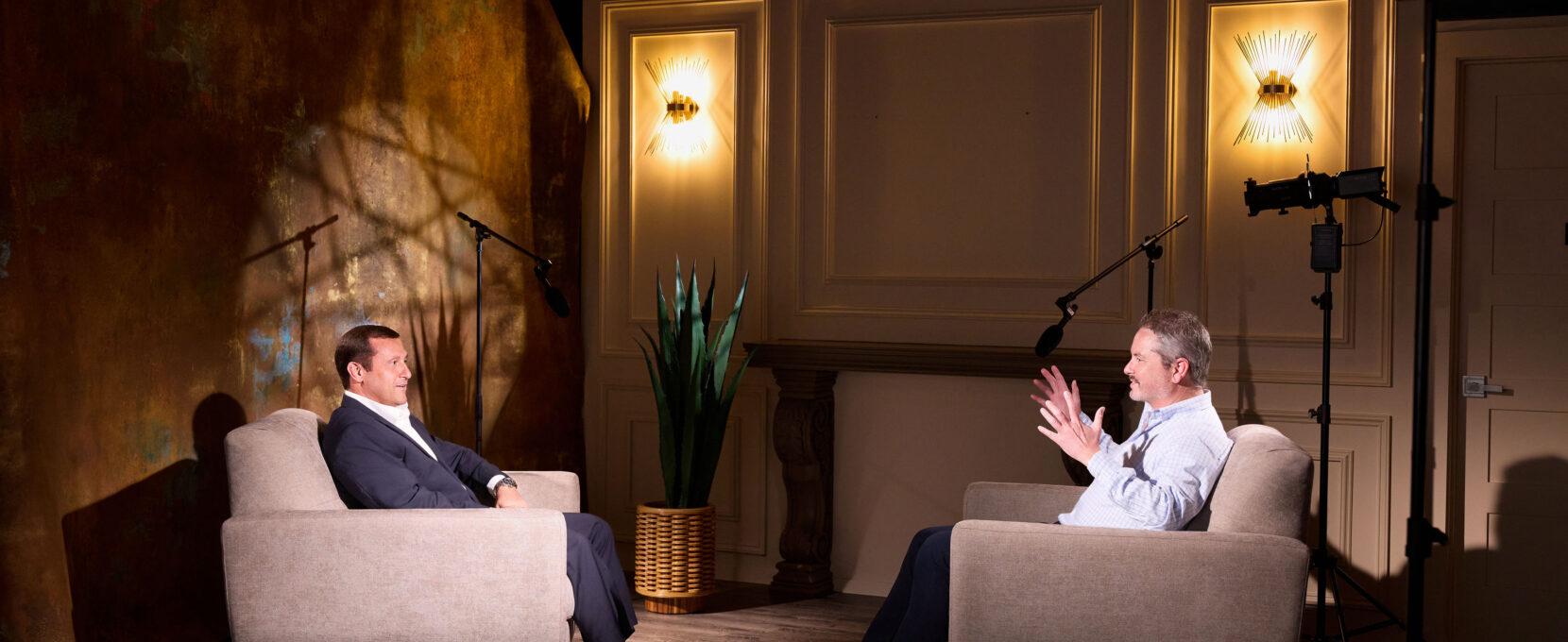
A new editorial section, Business to Business, spotlights two local professionals at the top of their industries in conversation, giving readers insight into leadership, strategy and vision from the people shaping our local business community. In this edition, Stephen Levy, president of architecture firm Levy Dykema, and Nathan Swinney, owner and principal at Swinney Construction management, sit down to discuss leadership philosophies, what success looks like in client-driven industries and more.
Stephen to Nathan
On technological advancements, adaptability and dynamic leadership
In today’s environment, how are factors like rising costs, timelines and client expectations influencing the way projects are approached from a construction management standpoint?
Rising costs, timelines and client expectations have and continue to drive the need for greater efficiency and effectiveness, and technological advancements help achieve both. These factors, among others, gave rise to construction management as a dedicated profession in the 1970s, and they persist today, though on a continuum of sorts. Today, as with most businesses, the tools used in construction management are evolving at an exponential rate compared to any time in the past. The practice of construction management—the way projects are approached—has become increasingly technology-dependent. Technology has, in many respects, made construction management more effective.
Mature technological developments have also made construction management more efficient. Examples include cloud-based construction management platforms, on-screen takeoff programs and scheduling software. For the most recent AI technologies, similar efficiency has yet to materialize. Cost is a big part of the efficiency equation, and the most recent industry-specific AI technologies are expensive to license today, glitchy and require quite a bit of human capital to produce the desired output. Some examples of the latest technologies include automated estimating and scheduling programs and industry-specific language learning models.
Where do you most often see the gap between a project’s design intent and its execution, and what helps bridge that most effectively?
The answer to the first part of the question is commonly two-fold: Despite best efforts and intentions, the plans and specifications sometimes fail to convey the design intent completely; and where the design intent is clearly conveyed, construction sometimes fails to achieve the intended quality. A constructability review can be performed during the later stages of the design phase and aims to proactively identify design errors and omissions prior to the issuance of plans and specifications for bid and/or construction. Engaging an independent third party qualified to perform a constructability review is highly effective in reducing requests for information, costly change orders and construction delays. Continuous inspection/observation throughout construction aims to identify and correct defective materials prior to their incorporation into the work, and defective workmanship as it occurs.
Alternatively, periodic inspection/observation can be performed whereby defects may not be discovered until after the work has occurred, or not at all, as some of the work may be encapsulated by other work. Engaging an independent third party qualified to perform inspections/observations throughout construction is highly effective in reducing tear-out and rework. Periodic inspection/observation is also effective at identifying defects, but less so at reducing tear-out and rework.
How do you approach leadership when managing both people and processes, especially across projects with so many moving parts?
With an open mind. Leadership in construction management is dynamic; processes are less so, as they are typically well-defined in the contract documents and industry best practices. Leadership, though, takes on different forms project to project. A project team often consists of people or teams of people coming together for the first time, or who do not work together regularly, with differing company cultures, values, experiences, attitudes and vested interests. There is no one-size-fits-all approach. There are, however, principles I consistently employ regardless of the project or the composition of the team:
Learn, value and rely on the skills and expertise each team member brings to the table. Understand that it is as much about how well we adapt plans as about how well we plan, because rarely does anything go exactly according to plan. Accept that unforeseen challenges will arise, and only through collaboration will they be overcome. As a leader, I must always do what I am supposed to do, when I am supposed to do it, do it well and expect the same of other participants. Be respectful, and never seize an opportunity to degrade another for the sake of self-promotion. Listen to understand, not to reply. And lastly, stick to the contract documents; where those fall short, revert to best practices.
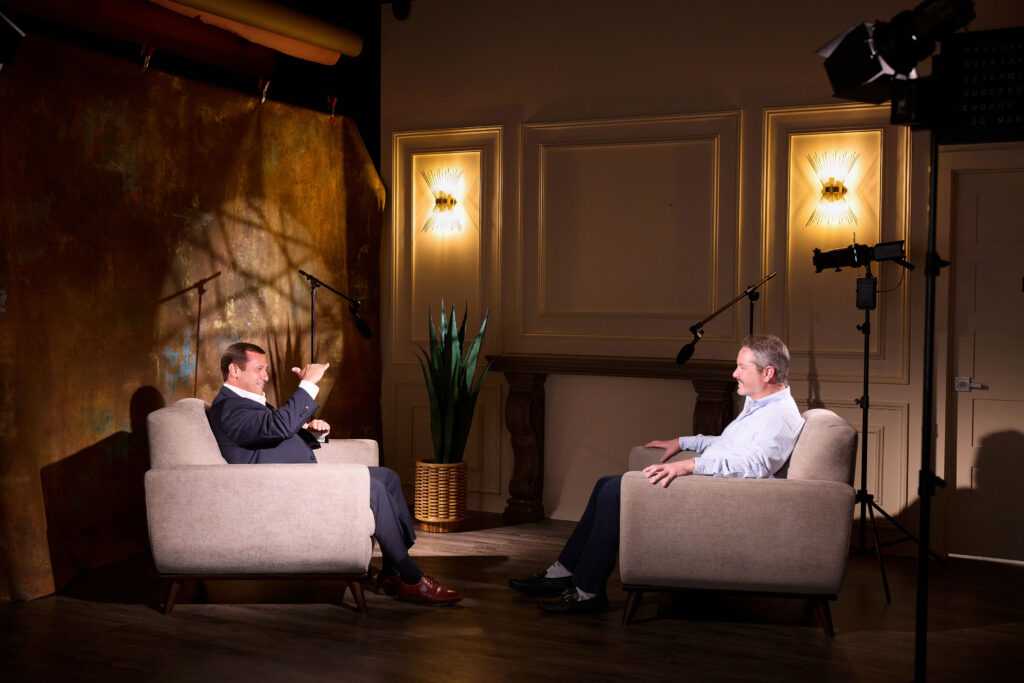
Nathan To Stephen
On efficiency in projects and client-driven success
From your vantage point, how are clients’ priorities shifting right now, and how does that influence the way architectural projects are being designed and delivered?
In residential projects, we are seeing a continued push for more efficient building envelopes, HVAC systems, lighting systems and home automation. We are also seeing a push for more outdoor living. On commercial projects, we are also seeing a continued push for energy-efficient buildings with a focus on a high-end hospitality-type feeling. With the water crisis, on both project types, we are designing outdoor spaces/landscapes that are not dependent on irrigation, but native to the region the project sits within.
When reviewing a set of plans, what are the details that signal to you a project is set up for success, or that challenges may arise once construction begins?
I know a project will be successful when everything in the drawing set ties back to our client’s goals. That doesn’t happen during quality assurance; it starts at the very beginning of the project and carries through every phase of the design process. By the time we get to the set of plans, it’s just a matter of documenting the decisions we’ve made along the way.
Everything must be detailed to ensure design success and the client’s goals are achieved—whether it’s an outdoor planter detail, kitchen hood, the layout of the HVAC registers and how they look in the space or the way the sidewalk interacts with the building facade elements and landscape. With a fully detailed set of plans and regularly scheduled construction site visits from our team, we can address any challenges during construction to ensure a seamless design and that the intent is met.
As a firm leader, how do you balance maintaining a clear design vision with running a sustainable, client-driven business?
They are all tied together. We are successful because clients are buying into our design approach. We believe that good architecture is an investment and, like any investment, it has to make financial sense. Because we are client-focused, our measure of success is based on hitting our clients’ goals for budget, schedule and aesthetics. At the beginning of every project, we reaffirm the client’s project goals and scope. We always attempt to source local materials suitable for the region where each building is located—doing so ensures the life cycle of those materials is best suited to that environment and minimizes the cost of getting them to the site since they are local. With effective, regular client and internal communication, we ensure our design vision aligns with the client’s program and that our business remains sustainable by being client-driven.
What hasn’t changed is the need to develop a deep understanding of the client’s goals up front. We pride ourselves on being problem solvers. As long as we set clear expectations early, designing for these priorities, or any others, is easy. Delivery of these spaces is a collaboration among our clients, engineers and contracting partners. When we all share the same goal for the client, the collaboration ensures the client’s goals are successfully implemented.