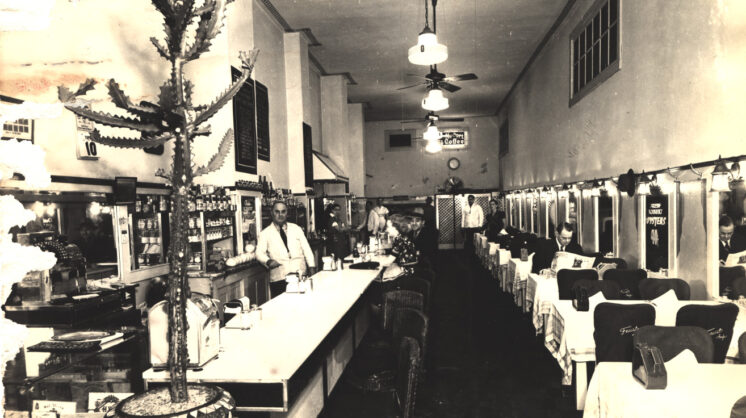
Chaparral Street was bustling in the 1930s, with several newly completed large projects, including The Ritz and the Pope Building, also known as the Medical Professional Building and now the former Sea Gulf Villa. On its first floor, at 412 N. Chaparral, was Faust Café, owned by Greek immigrant Meydon P. Lymbery.
It boasted waitresses, cloth tablecloths and embroidered chairs, and the menu may surprise modern readers a bit. Advertisements in the restaurant highlighted common menu items—Nu-Port Coffee (produced by Nueces Coffee Co.) and “Fresh Rockport Oysters,” sold for 40 cents, along with a 20-cent Virginia ham sandwich with a beer. Sandwich and seafood menus hung on the wall behind the counter.
In the back, cooks wore white aprons and prepared the meals in a very simple setup—a single table at the center of the room with a large row of industrial sinks. Hanging on clotheslines above the cooks were wash rags drying after being laundered. In the days before single-use paper towels or efficient washing machines, keeping a restaurant kitchen tidy had challenges we rarely consider today.
Advertisements dubbed it “The Popular Café,” and the restaurant operated multiple locations, including one in the 700 block of Chaparral, where Rockit’s stands today. When Lymbery died suddenly in 1940, his passing made front-page news. The city mourned the man known as “the Greek philosopher,” a nickname earned for his uncanny ability to predict local election results.
For a generation of Corpus Christi residents, a stop at Meydon Lymbery’s Faust Café was simply part of downtown life.