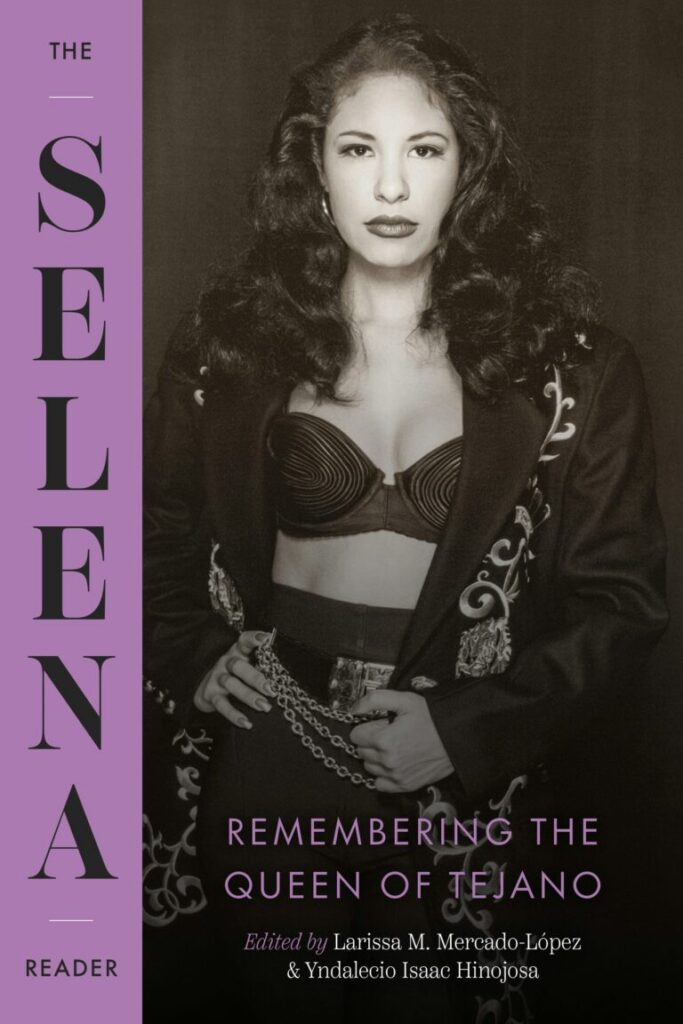
In a new book, two academics from the Coastal Bend have crafted a scholarly celebration of a local legend. The Selena Reader: Remembering the Queen of Tejano, published by the University of Texas Press, spans 262 pages of academic and creative works edited by Dr. Larissa M. Mercado-López and Dr. Yndalecio Isaac Hinojosa.
Hinojosa, associate professor at Texas A&M University–Corpus Christi, details a distinctly South Texan memory in the book’s introduction. On March 31, 1995, he was working as team lead at the Kingsville Long John Silver’s on a busy Lenten Friday. Word began trickling in through the drive-thru window as customers followed developing news on their car radios, with the worst confirmed that evening. Hinojosa was 23 at the time, the same age as Selena Quintanilla-Pérez on the day of her tragic death.
He went on to earn a master’s in English from TAMU-CC, returning to his alma mater as an associate professor after earning a doctorate at UTSA, where he first met his co-editor. On campus, he often overlapped with Mercado-López, whom he came to respect as a scholar, a creative and a leader. “I am proud to have met Larissa in this lifetime,” Hinojosa shared.
Mercado-López was born in Corpus and raised across the bridge in Gregory, earned triple degrees from UTSA and secured tenure and a department chair position at Fresno State in California. She may serve as a premier Selena scholar, quoted in The New York Times about the power of MAC’s “Como la Flor” lipstick, but as a 13-year-old heeding the casting call for the 1997 biopic, she was just “a girl with a dream and a really terrible Catholic school headshot.”
“I was only invited to be part of the large concert scenes, but because the concert scenes were not close to Gregory, I didn’t get to participate,” she recalled. When her father received a tip about another filming location, “He loaded us up into our family van and we parked and hid in the darkness.” Now, when her own children watch the movie Selena, Mercado-López points to the refinery in the background and says, “I think I can see our van!”
The two grad school friends had discussed the idea of The Selena Reader as early as 2018, when Mercado-López invited Hinojosa to join her on the project. At first, he declined, but on a conference road trip, he stopped by to see her in Fresno. “She described for me her vision once again for this project. She convinced me that I could do it,” Hinojosa explained. “I was honored, really, that she had faith in me and that she wanted to work with me on this project. As soon as I got back to Corpus Christi, I worked on the call for proposals with her, and we sent it out into the world.”
“We started working on this collection in the fall of 2019, right before the pandemic,” added Mercado-López. “I am so grateful for Hinojosa’s expertise that he brought as a seasoned editor, a Latinx Studies scholar and a skilled and compassionate collaborator. He was instrumental in encouraging me to persist with this project when times were hard.”
The co-editors present The Selena Reader as an offering, similar to leaving a rose ofrenda at one of the singer’s monuments—even signing their foreword para Selena, con amor. “This collection is our gift to the fandom,” they write in their introduction. Entries cover bilingual poetry, a COVID-era pilgrimage, an exploration of her iconography within the phenomenon of diva worship and the “working-class Latina aesthetic” she projected, even analyses of performers like Valentina from “Drag Race” and Corpus’ own Selena impersonator, Honey Andrews.
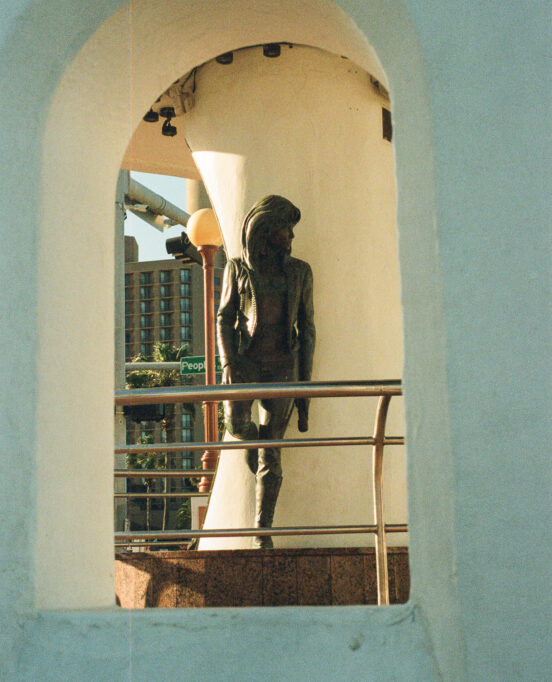
Selena’s worldwide popularity as a mural muse gives context to a visual rhetoric study conducted by TAMU-CC professor Susan Garza and two former students, Kristina Gutierrez and Danyela Fonseca. With hyperlocal focus, the three authors triangulate Selena monuments across Corpus: the Molina mural (first created by schoolchildren in 1995 and refurbished in 2019), the gravesite in Seaside Memorial Park and the Mirador de la Flor statue—they cite uncredited social media photos illustrating the latter sculpture wearing a life jacket in preparation for Hurricane Harvey in 2017 and a medical mask to combat COVID in 2020.
“Circulation of such images indicates that locals were humorously yet staunchly protecting an iconic symbol of their city against the impending crisis,” the authors write, ensuring that such meme-worthy musings are now immortalized in academic literature for future scholarly research.
Deborah Paredez coined the term “Selenidad,” defined as “the dynamic and vibrant afterlife of the Latina superstar,” in her 2009 Duke University Press work of the same name, the first book-length academic study of Selena’s influence on the culture at large. “The Selena Reader, as the first edited collection of works on Selena, contributes to Selenidad,” said Hinojosa.
In 2021, UTSA associate professor Sonya Alemán began offering a course titled “Selena: A Mexican American Identity & Experience.” Alemán documents that experience in her contribution to The Selena Reader, complete with a reading list.
“We knew that conversations about Selena were happening in informal spaces in academia and wanted to create a space to more formally apply the theories and frameworks in our disciplines to these conversations,” said Mercado-López. The popular “Selena T-shirt Day” at research conferences allows scholarly fans to sartorially signal to each other within academia. “Bringing Selena into academic spaces brings joy and a sense of connection,” write the authors of a Selena Reader piece that makes the case for a Selenidad epistemology. “I haven’t attended conferences that recognize Selena T-shirt day, but I definitely dress in ways that are ‘Selena coded,’ such as wearing a bold red lip!” said Mercado-López.
With their book released on the 31st anniversary of Selena’s passing, both Mercado-López and Hinojosa acknowledge how “public remembrance” of that “community wounding” continues to affect the culture. “We wanted to work together on this book as natives of the Coastal Bend, as scholars of Chicana feminism and as friends,” she continued. “We were also both personally inspired by her, and love her music!”
The Selena Reader contains eight pages of color photos and is available in paperback or ebook for $34.95; a hardcover cloth edition is $105. The authors will be speaking and signing books 1:15-2:15 pm on Saturday, April 11, at the San Antonio Book Festival in the Salazar Gallery at San Antonio’s Central Library, 600 Soledad St.