
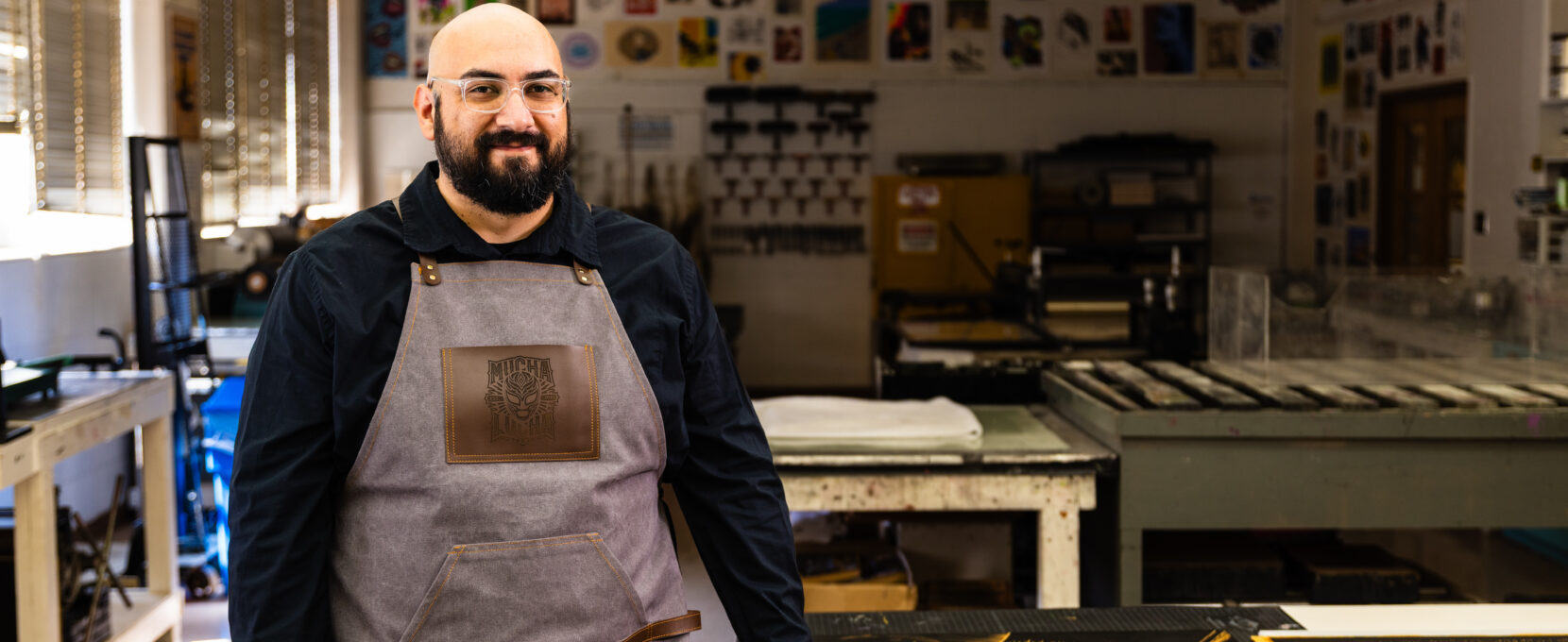
Omar Gonzalez can trace his artistic beginnings back to a single piece of construction paper. It was elementary school, and like many children, he drew the world immediately around him—stick figures, trees, the driveway, the homes that formed the center of his young universe. But unlike most childhood drawings that get lost to time, Gonzalez’s mother saved and framed his. That small act of recognition became one of his first conscious memories of art, a quiet signal that what he created mattered.
Growing up, he became known as “the kid who likes to draw,” the one sketching in class or thumbing through a binder filled with his own work. Art was present, but for many years it lived in the margins of his life rather than at its center. After high school, he took a few drawing classes as part of a general degree at Texas A&M University–Kingsville, though his academic path led him first into business. By 2009, he held a master’s degree in business and was casually making art on the side, without expectations that it would shape his future. Everything changed in 2012.
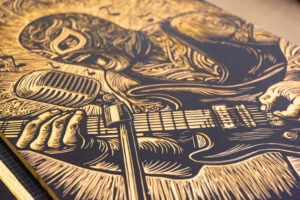
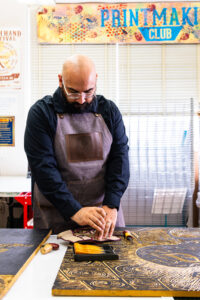

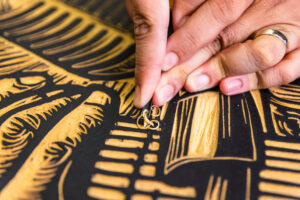
Feeling pulled toward something more meaningful, Gonzalez made a choice that would recalibrate his life: He returned to school to pursue a bachelor’s degree in fine arts. Until then, drawing had been the extent of his artistic language, but in the studio classrooms of his BFA program, he was introduced to an expanded world of creative possibilities: painting, digital media, ceramics, sculpture—and then he discovered printmaking.
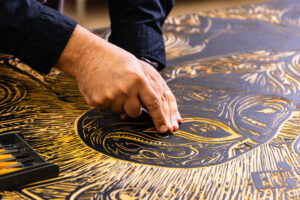
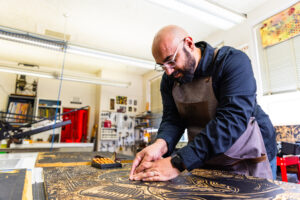
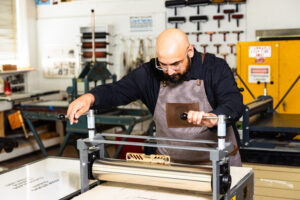
The revelation was immediate and electrifying. Gonzalez fell in love with the process, its discipline and its demands, the way it allowed him to build an image layer by layer. He immersed himself so fully that he spent nights in the studio until sunrise; learning, experimenting and finding his voice. “This is what I want to do,” he told himself. It became the artistic identity he would begin shaping for years to come.
Although he initially resisted the idea of more schooling, encouragement from a professor eventually persuaded him to pursue an MFA. In 2017, he entered the graduate program at the University of Texas at San Antonio, a place that would challenge him, break open his creative assumptions and force the question all artists must confront: Why are you making this?
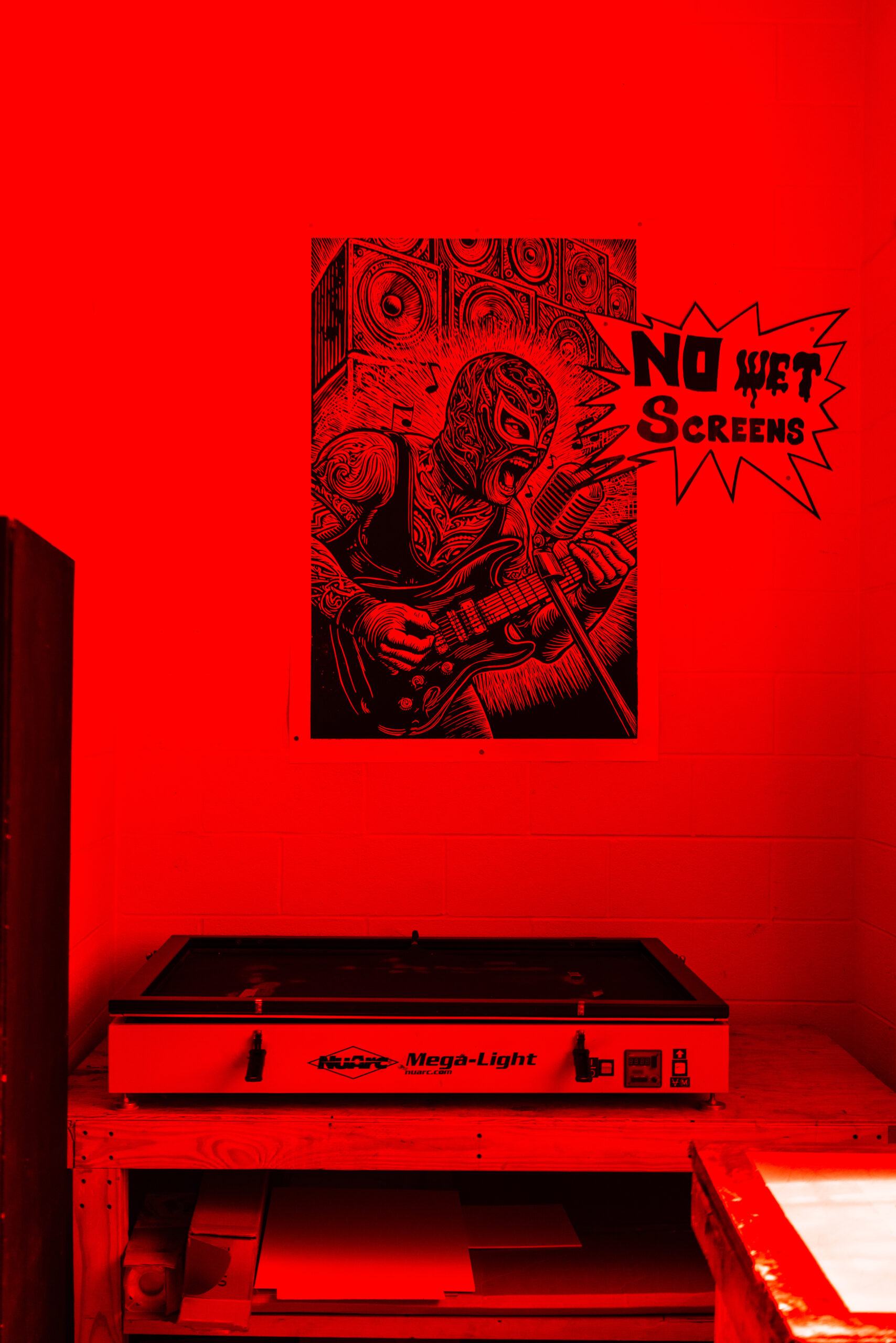
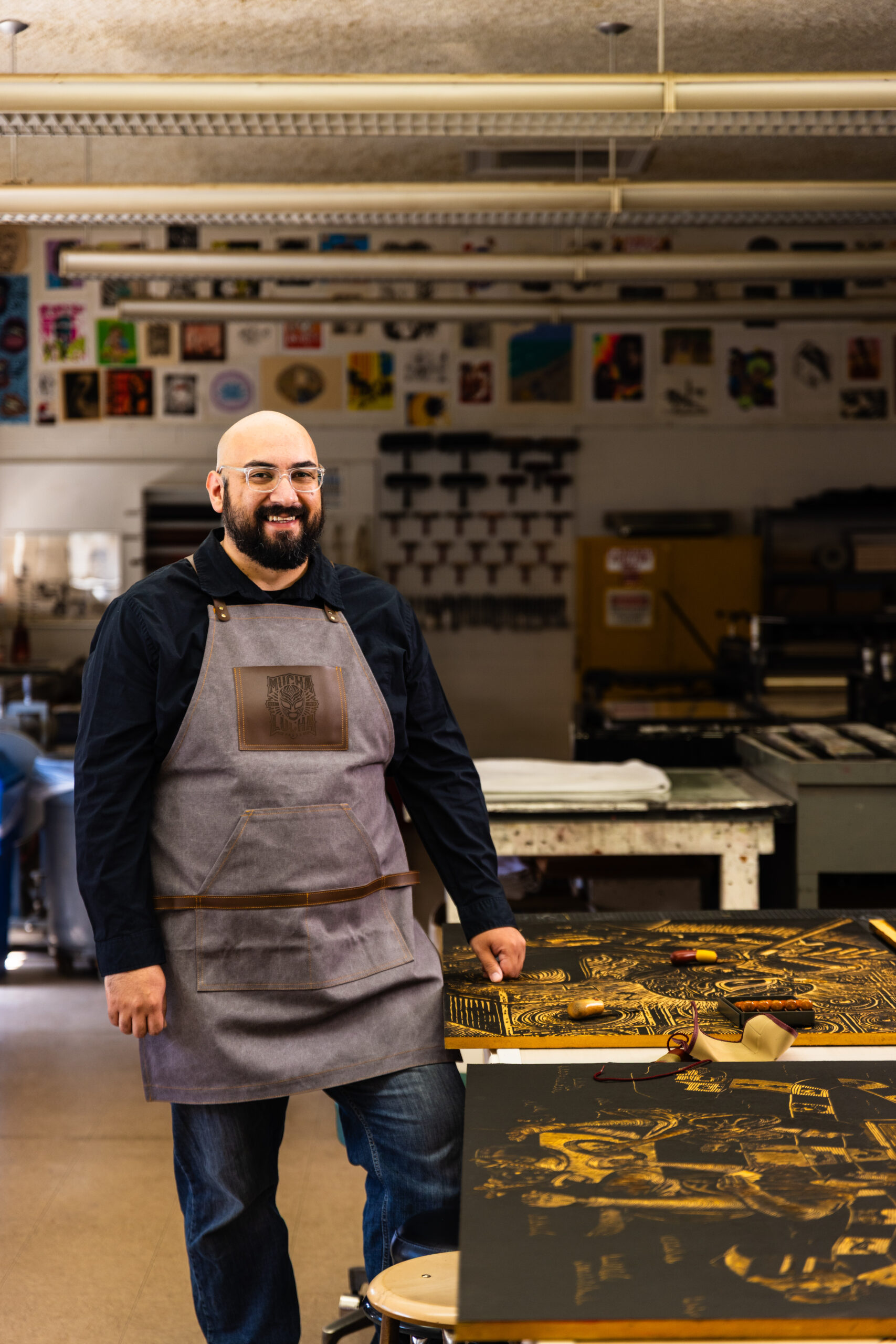
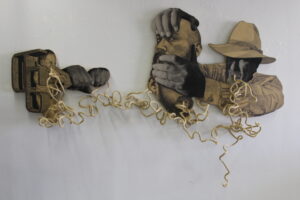
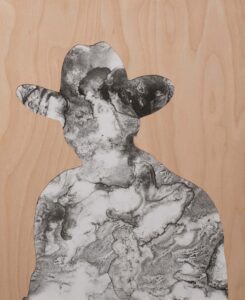
Graduate school pushed Gonzalez to look inward. Rather than creating work he thought would appeal to others, he began examining the histories and stories embedded in his life: his family lineage, his upbringing and the landscapes that raised him. He grew up on a ranch outside Kingsville, surrounded by rural life and the rituals of labor and land. With deep Texas roots that stretch back six generations, his heritage became fertile ground for exploration. He began incorporating iconography such as historic Texas maps, and ranch tools, all symbols of continuity, labor and generational connection.
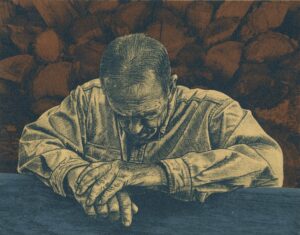
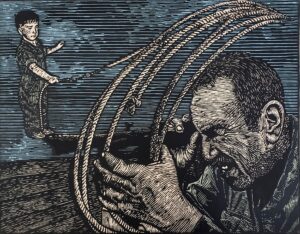
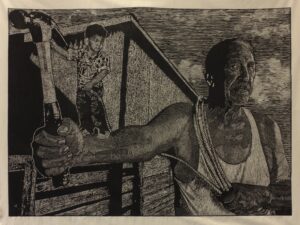
This shift inward ultimately led him to the most personal and transformative body of work he has created. In 2019, while still in his MFA program, he approached his father with an unexpected question: Would he agree to be the subject of his art? His dad accepted, though with a humorous misunderstanding at first. He imagined formal, regal portraits, the kind that immortalize kings. Instead, Gonzalez wanted honesty. He asked his father to wear the clothes he wore at home, to hold the tools that shaped their lives, to pose in ways that captured the man he truly knew. What emerged was an intimate exploration of their father‑son relationship.
For three years, Gonzalez photographed and worked with his father, gathering source material during school breaks. Through prints and mixed‑media works, he built a visual language around masculinity, labor, love and the quiet complexities embedded in family roles. The resulting series became Homebound, an evocative title chosen for its dual meaning. Either being headed home, or unable to leave it, the series was a perfect encapsulation of the push and pull among heritage, identity and belonging.
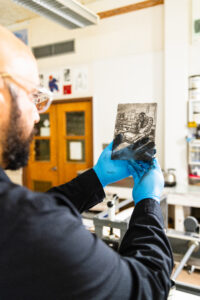
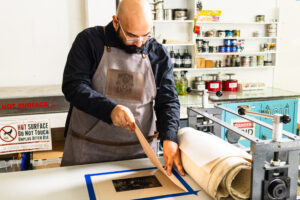
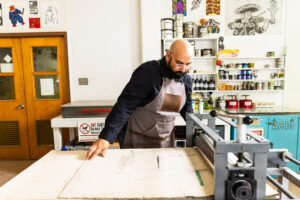
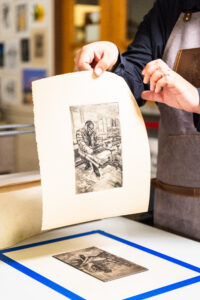
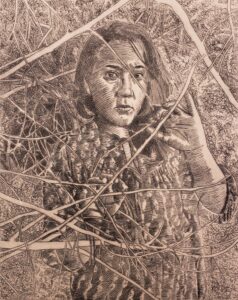
Homebound eventually led to exhibitions, but the series also marked the last body of work featuring his father, who passed away in 2024. Gonzalez entered another profound creative period, one shaped by grief. The absence of his father became the central theme of a new series, transforming memory, loss and longing into a visual narrative. Through this work, he found connection with others navigating similar emotions, discovering how deeply art can serve as both expression and dialogue.
Now an instructor at Texas A&M University–Kingsville, Gonzalez often sees reflections of his younger self in his students. He urges them to pursue their passions boldly and to embrace vulnerability in their work.
“Art is a way to communicate,” he tells them. “Don’t be afraid to put yourself into it.” His journey, from childhood drawings to deeply autobiographical art, stands as proof that it’s never too late to follow the path that calls you, and that the most powerful work often comes from the most personal places.