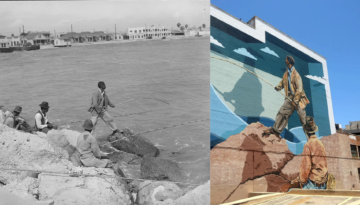

The Nueces River has always been part of Corpus Christi’s story—it was the disputed U.S.-Mexican boundary during the Mexican-American War—so it’s not at all surprising it’s a valuable resource even to us today. Three times, Corpus Christi has made enormous investments in a dam on the Nueces to provide for the region’s future.
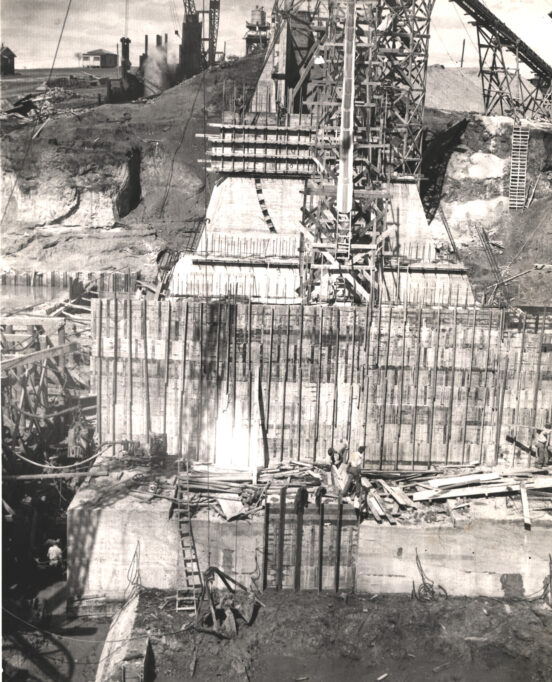
In 1929, La Fruta Dam was completed, creating Lake Lovenskiold—Dr. Lovenskiold was the mayor from 1921 to 1931. A partial failure occurred in its first year, and construction began yet again to create a second dam. Using some of the same structure, the Mathis Dam created what we now know as Lake Corpus Christi. The project was funded by President Roosevelt’s New Deal, which also led to the construction of multiple structures by Civilian Conservation Corps Company 886. These included a park road, bridges, a boathouse and a refectory built of local caliche, now called the pavilion, and still standing today.
With growth across the region, the dam served for just a generation before calls to expand arose. By the mid-1950s, both the old Harbor Bridge and the Wesley E. Seale Dam—also named for a mayor—were under construction during a period of immense growth in the area. That dam still serves the area today, holding whatever water comes our way for the region’s use. As we look toward the next investment in water for the region, the answers are just new entries added to a long list of civic investments that have sustained the city through generations.