

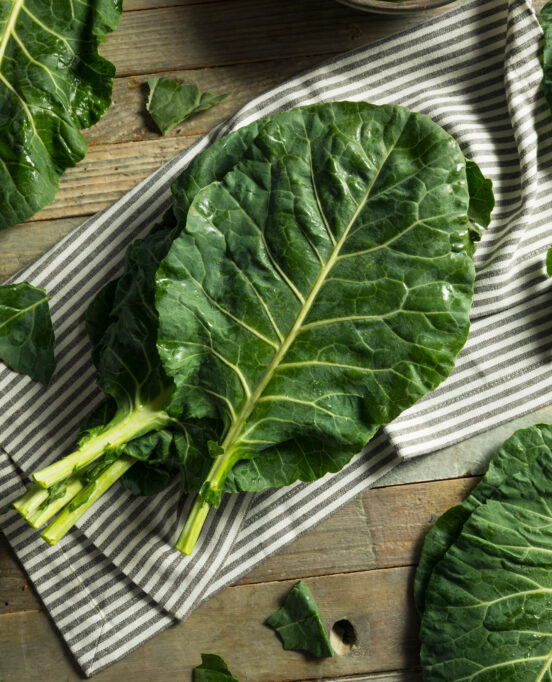
Companion planting is an interesting way to increase vegetable production, maximize garden space and prevent pests; and two of the best companions of all are tomatoes and collard greens.
Planting collard greens closely together creates a dense canopy over the garden bed. This is beneficial for tomato plants because the shade keeps the soil cool, which is essential for fruit set. Collards also naturally deter many of the common pests that target tomatoes.
In turn, tomato vines grow tall up their trellises and provide shade for the collards. A cool-season vegetable, collards need this shade to thrive as the weather heats up in summer.
For years on our Rockport farm, we’ve successfully grown collards and tomatoes together. This harmonious planting begins in early February with collards, which quickly create a protective canopy. In March, we introduce the tomatoes into the center of this lush environment, where they grow alongside the collards without crowding.
Collard greens grow from a central stalk, continuously producing leaves as the stem gets taller. Once the first set of leaves has developed at the top, you can begin harvesting. To ensure continued growth, take no more than a third of the leaves from each plant at one time. You’ll be able to harvest collard leaves all the way into July.
Collards may (but usually don’t) become bitter in the high heat of summer. However, they keep growing, shading the soil and preventing pests from attacking the tomatoes.
As the weather heats up, aphids, cutworms and harlequin bugs may attack collards. Prevent aphids with ladybugs (order online); cutworms with Bt (find at a local nursery); and harlequin bugs with garlic-pepper tea (see recipe below).
Gardener’s Notes
Growing Up: Spacing, 12” to 14”. Height, 12” to 30”. Full sun. Requires rich, well-drained soil. Can be planted from seed; best planted as a transplant. 50 to 80 days to harvest from seed. Add four inches of organic compost to the soil when planting. Add ½ cup pastured poultry manure and ½ cup wood ash per plant to the soil. Water three times per week: once in the first week, twice in the second week, then weekly or as needed. Mulch with native leaf mulch.
Profiling: Companion planting: First, install tomato trellises down the center of a 36” wide garden bed. Plant two rows of collards, each row seven inches off-center along the bed. These two rows of collards will grow to form a dense canopy covering the entire bed. In March, plant tomato transplants down the center of the bed, between the rows of collards. The tomato vines will grow up the trellises and shade the collards. Harvest through July.
Fun Facts: How to make Howard Garrett’s homemade garlic-pepper tea: In a blender (preferably outside), combine two bulbs of garlic and five or six habanero or dragon peppers; use the hottest possible peppers. Dump the mixture into a gallon of water. This is the concentrate. Add 1 part concentrate and 4 parts water (strain when adding the concentrate) into the container. Spray or pour this mixture onto plants to repel harlequin bugs and many other pests. Courtesy dirtdoctor.com.